AI HACKATHON
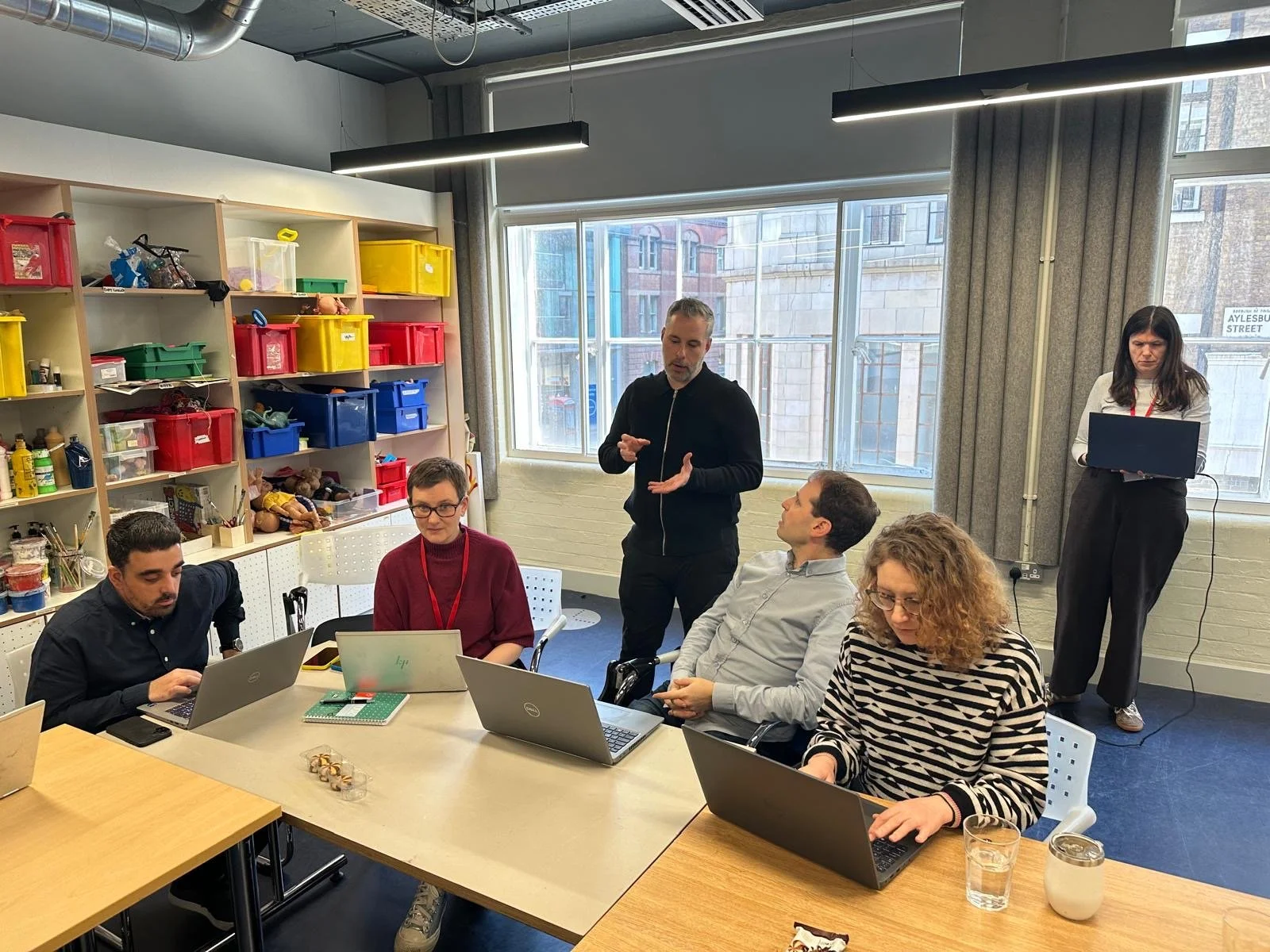
AI Hackathons & Why Not
From Individual Tools To A Collective AI Culture: The AI Hackathon
Move beyond solo tool experimentation and start building as an organisation.
Many businesses are currently stuck in a cycle of individual tool adoption, where employees experiment with AI in isolation. However, AI is not merely a technical initiative; it is a shared language for the entire business.
To transition from simple curiosity to a practical, AI-native culture, leadership must prioritise collaborative building.
The Natural Evolution: From Workshop to Hackathon
For organisations that have already conducted an AI workshop or are currently considering one, the AI hackathon is the essential next step to move forward.
Move Beyond Training: While training programmes are valuable, workshopping practical use cases gets people up the curve of practical use much faster.
From Lite Touch → Learning → Doing (Then Delivery): A workshop introduces the concepts, but the hackathon provides the environment to build something useful in a matter of hours.
A Statement of Intent: Transitioning to a hackathon sends a clear message to the business that AI is about active problem-solving and creation, not just theoretical discussion.
What is an AI Hackathon?
An AI hackathon is a structured event where a multidisciplinary team takes time out from their usual duties to solve problems and "hack" products together using AI tools.
It brings together the AI enthusiasts (called "AI-pilled" in AI World) and the sceptics to collaborate on tangible outputs.
Key Benefits for the C-Suite and Leadership:
Breaking Down Silos: This format brings Marketing, Sales, Operations, Finance, and IT into the same room to solve real-world problems together.
Conquering Resistance: Seeing a multidisciplinary team build a functional tool in a few hours conquers fear and resistance far more effectively than traditional training.
Shared Resources: Teams develop shared prompts, shared workflows, and a collective confidence that remains within the organisation long after the event.
Skin in the Game: Because the staff builds the solutions themselves, they are significantly more likely to use, refine, and advocate for those tools.
This also works as a prototype for Product and ENGG to deliver something that addresses issues and wouldn’t score high enough in effort vs reward sizing exercises.
The AI Hackathon Blueprint
The process focuses on rapid prototyping to ensure that AI initiatives do not get stalled in long-term roadmaps
Identify the Friction Points: Pick problems that have previously been identified as "medium effort/medium reward" - the ones that usually never get touched.
Map the Process: Step-by-step, map out a specific workflow (e.g., in finance or marketing) to identify exactly where AI can improve the process.
Build and Prototype: Using tools such as CustomGPTs or Gemini Gems, teams work to build a solution within a few hours.
Demo and Accelerate: Teams demo their prototypes, a winner is selected, and the solution is fast-tracked into the business roadmap.
"Prototyping is so quick now with AI. If you don't have something prototyped within an hour or 90 minutes, you need a check-in to get it back on track for delivery” from my upcoming AI Moment podcast - you can listen exclusively first here
Sustaining the Momentum
Because the AI landscape is changing so rapidly, a regular cadence is recommended for these sessions. If you are serious about getting an edge on your competitors every 4-6 weeks, you could be running an AI hackathon and driving business collaboration and change.
For larger organisations, a gap of no more than six to seven weeks ensures the business does not lose its competitive edge.
AI Hackathon FAQs
Who am I and why work with me on an AI Hackathon?
I’m Danny Denhard, a coach, consultant and advisor who helps leaders and companies improve performance across Marketing, Growth and Product.
A key part of my work today is helping organisations build practical, AI-native capabilities through workshops, hackathons and ongoing advisory.
2. What exactly is my AI hackathon offering?
I run structured AI hackathons where multidisciplinary teams step away from day-to-day work and use AI tools to solve real business problems in hours, not months. We go from friction-point identification to mapped workflows, rapid prototyping, demos and a clear plan to productionise the best ideas.
3. How is my approach different from typical AI training?
Most AI training stops at concepts and tools. My approach is build-first: we take real “medium effort/medium reward” problems that usually never get prioritised, bring cross-functional teams together, and prototype working solutions fast. The aim is a lasting AI culture, shared prompts, shared workflows and collective confidence, rather than a one-off “innovation day.”
4. What kinds of organisations and leaders do I work with on AI?
I work with C‑suite leaders and senior teams in scaleups, marketplaces, challenger brands and established enterprises who know AI can be a competitive edge but are stuck in fragmented, individual experimentation.
I’m particularly effective when there’s a desire to break silos and move from AI curiosity to AI-powered delivery.
If you are looking to run an AI transformation project, not just a tool rollout I wrote and podcasted in depth about AI transformations to help you
5. How can we explore working together on an AI hackathon or broader AI programme?
You can contact me directly via email (ai@dannydenhard.com), book a call, or use any of the contact forms on my site to outline your company, current AI maturity and the problems you want to solve.
From there, we’ll assess fit and design the right mix of AI workshop, hackathon and follow‑up support for your organisation.