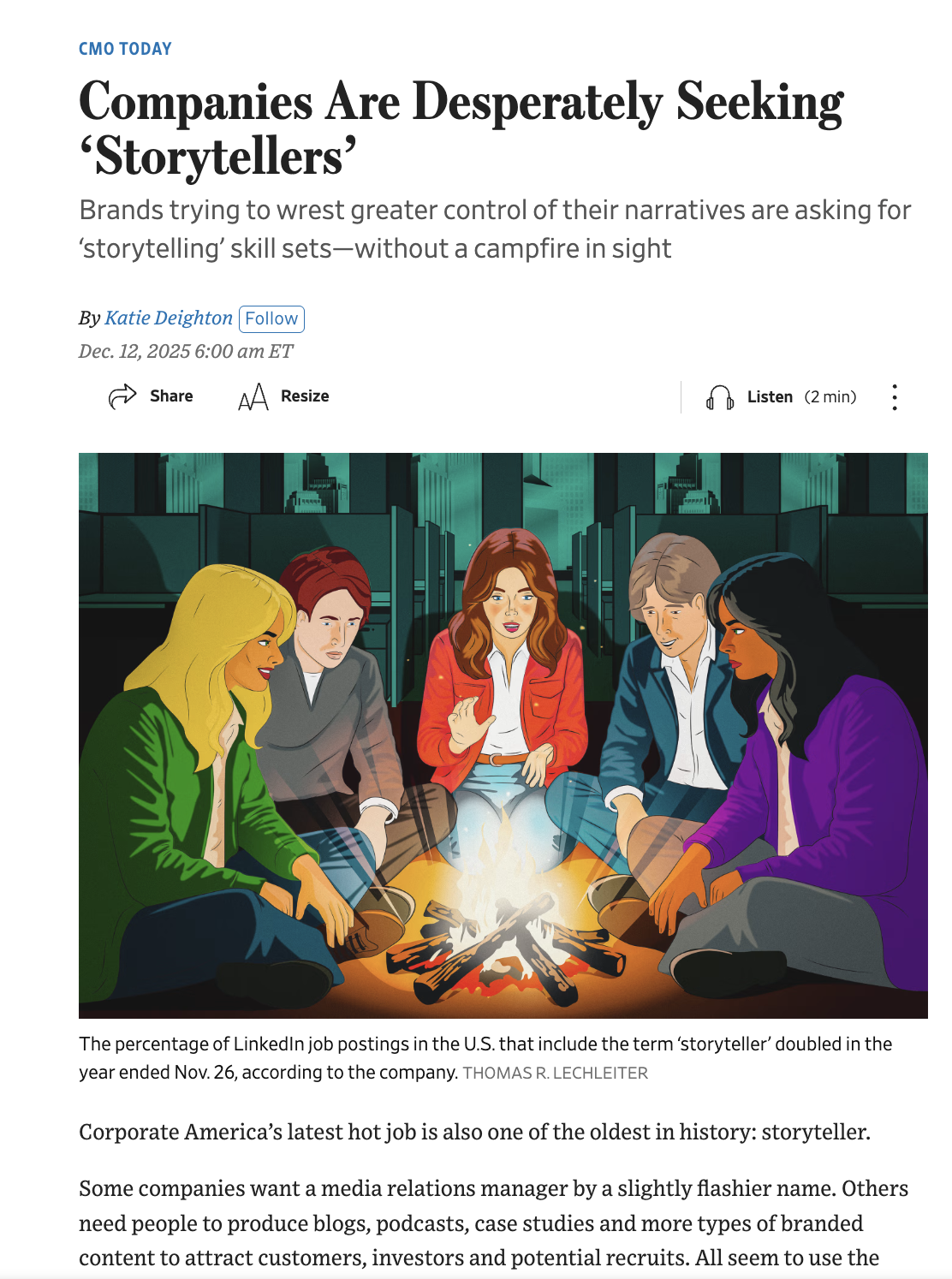
This week, the WSJ published an article discussing the increased demand for storytellers and the roles being created specifically for storytellers.
It’s been something so many smart Marketing and corporate leaders have known but never hired for or relied on the CEO, founder or official spokesperson to fulfil.
The article is a good intro to storytelling trend, but let’s go a little deeper.
What’s been missed from most discussions is the different ways of storytelling and the way you can storytell, you can use:
The product
The SKUs
The service
The packages
The impacts
Cultural impact
Economic impact
Customer stories
External customers
Internal customers, i.e employee stories
Founder stories
Company leaders stories
Leaked screenshots
Highlighting the nuance
Leverage data
Most often, internal data
Integrating external or survey data
A commissioned documentary (on Channel4, Netfix, YouTube)
Screenshots and allowing stories to come from screenshots (underutilised)
New Ways To Storytell
In today’s feed-driven consumption model, to gain cut-through, many companies miss the new media ways of storytelling & default to pre-2024 approaches or only rely on official channels.
The ways to tell stories have exploded over the last few years:
Video (short, mid and long form)
Written (web content, press releases, newsletters etc)
Podcasts (video and audio)
Voice
Including audio notes, voice notes and even voice-first newsletters
Chat apps
GIFs etc etc
Clipping Leads The New Way
Clipping is critical; the best Marketers and comms people know this and ways to match message with channel and audience… not just send another email, push notifications, bland blog posts and appear on an industry podcast.
It’s vital to remember: some of the best corporate storytelling never talks about a product or a service and that’s why so many brands have let their customers do the storytelling, for their product or service to be discussed by “creators” or KOLs etc and influence how your brand organically connects with stories.
Too Many Channels Too Many Messages: The way we consume news and stories is now through social media, email, video (YouTube), TV, radio and chat apps, you can only break through with the right message in the right format and even then it might be forgotten & lost in content over-consumption.
Joe Rogan or Tim Ferriss might break a product in conversation on their podcasts, a random TikToker might show themselves using your product and it explodes, or, an AI researcher might say how impactful your platform was in problem solving and drives huge awareness as the industry insiders clip a section and share in the WhatsApp or iMessage group.
A Story Break: I always remember comedian Kevin Bridges mentioning the business line I was leading, and then a flood of messages about his comedy special and saying how good/bad it was for us. He told a way better and funnier story than we ever could dream of!
The Road To Storytelling… What wasn’t referenced on these chats was that the root to get everyone like Kevin was engineered by the team, leveraging social sharing, on-site sharing prompts and leveraging the network effects in the crowdfunding product, it managed to get in front of him enough he did a whole bit on it.
Storytelling can be a product of the product.
Storytelling operates differently for brands now. The question you will ask yourself will be:
Do we amplify
Do we leave it/ignore
Do we comment
Do we reward
Do we repurpose…
Storyteller’s Role Warning
The most important aspect of storytelling that needs to be discussed is how these storytellers are supported operationally, and the right volume of internal and external content is created and curated to support growth efforts and to influence customers and partners.
Storytelling is hard, creating quality and quantity content with the right tactical and strategic narratives is increasingly difficult, especially if it is not supported by the C-Suite and business leaders.
Without the right operational support and a dedicated storytelling engine, you will be fighting an uphill battle.
Storytelling: The Next Phase Of Companies As “Media Companies”
Certain industries truly became media companies. Sports teams embraced highlights, fan tv, tribal remixing. Leaks can be linked to fan and ITK (in the know) accounts and forums, all part of creating narratives and conversations.
It may be easier for teams with directors, managers, press teams, EFC with club staff, players, ex-players, club legends, but then they embrace pundits, fans and super fans and often haters to continue the story.
Visualising The Storytelling Engine
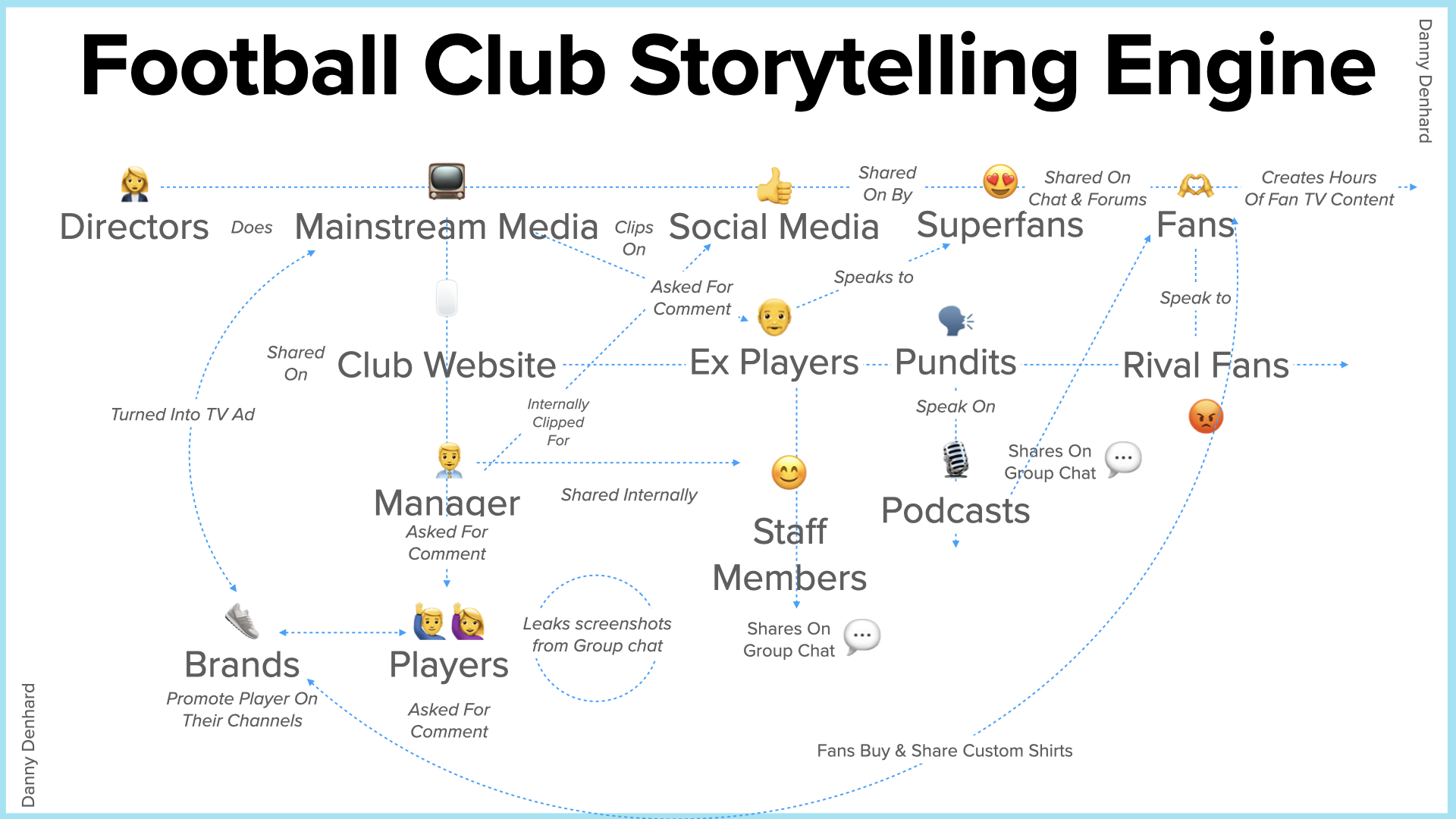
Here’s just one example of how one interview is turned into a content engine - brands can do equivalent too
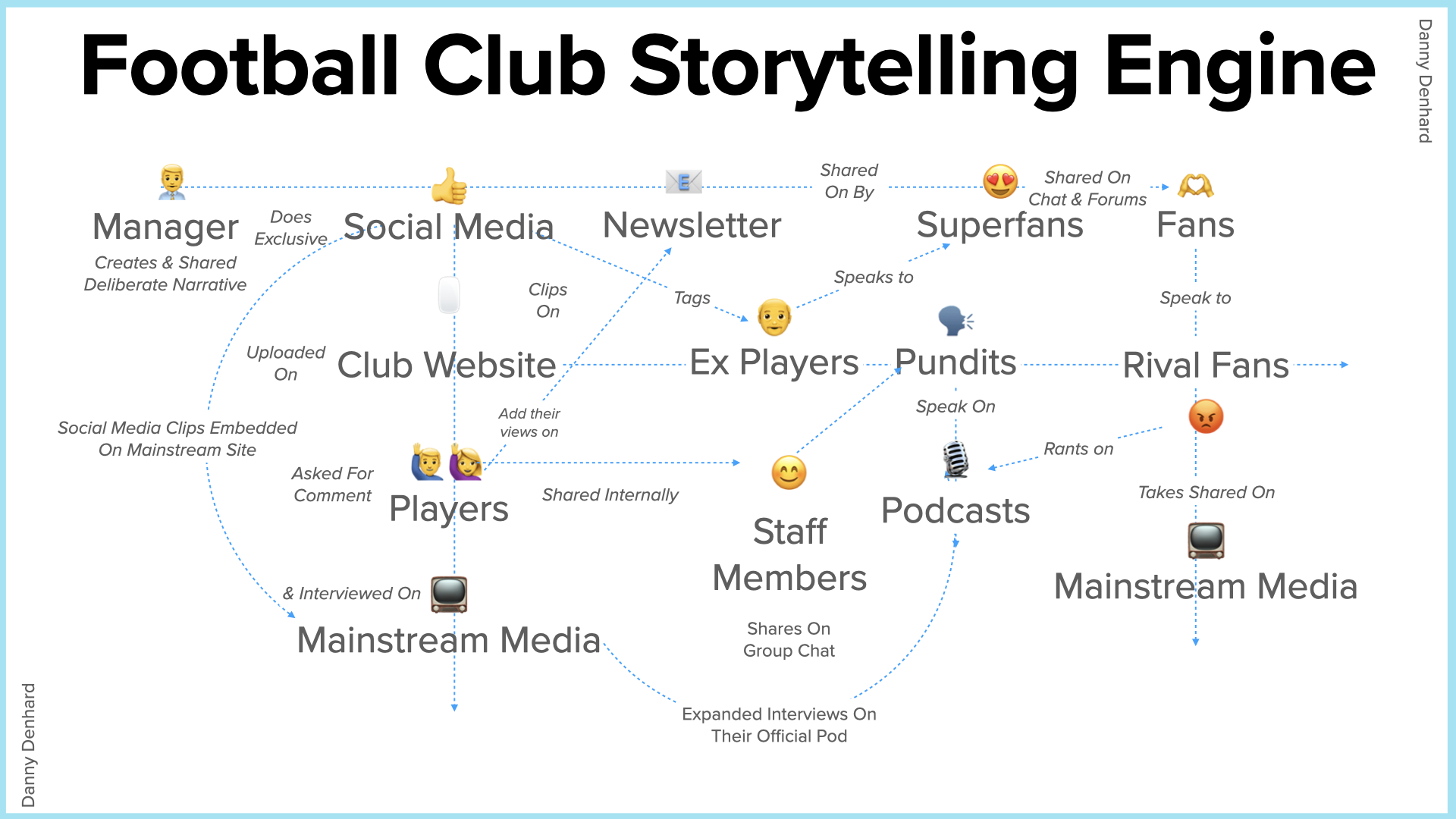
Here is how the manager of the club goes onto the clubs social media channel and to kicks off huge amount of content and creates ripple through fans and superfans to ex players and pundits. By creating a number of narratives storytellers pick up and create, curate and promote that content endlessly
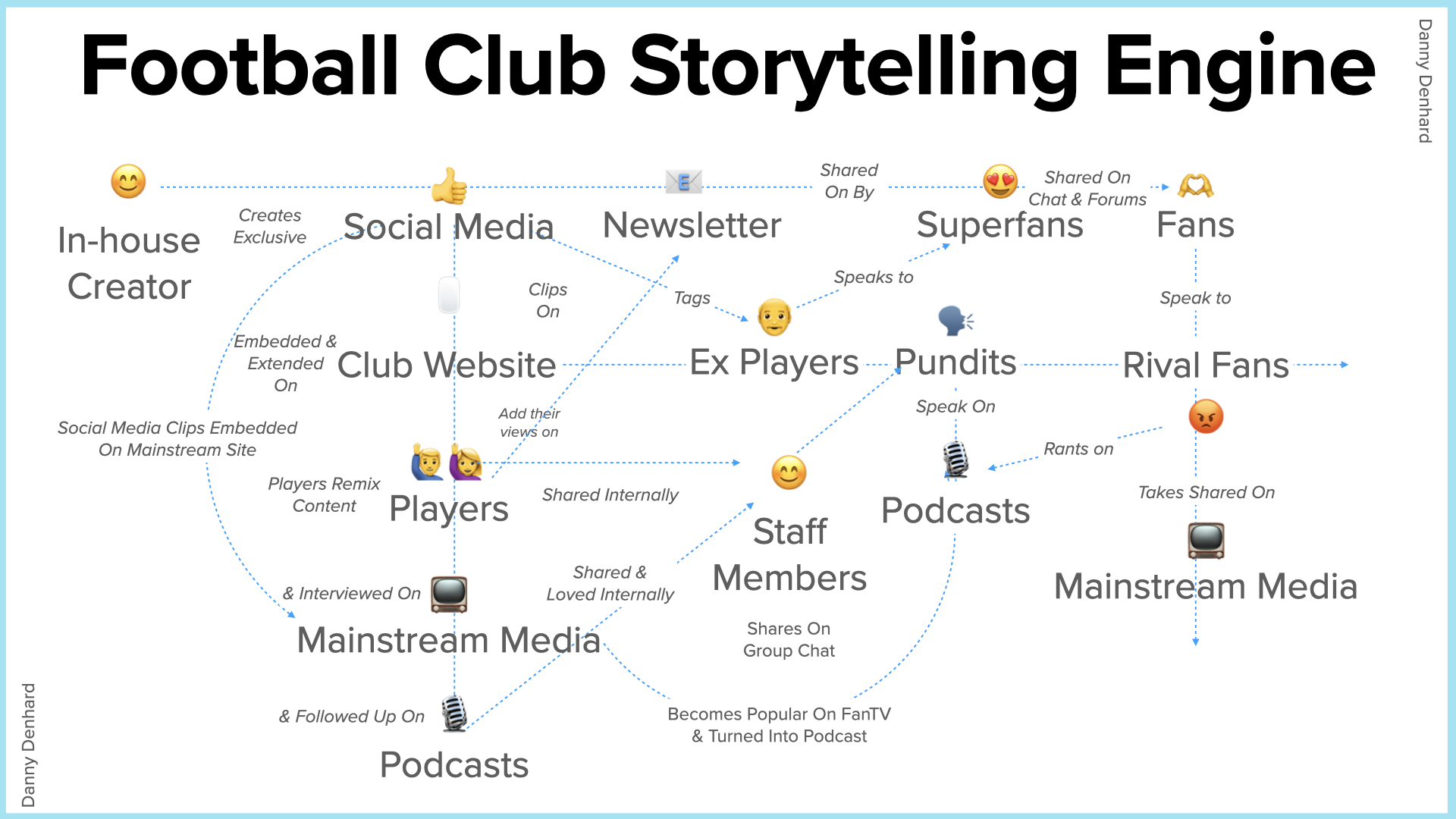
Why an internal storyteller (aka in-house creator) can create content and it starts the engine to promote content or create a movement. This is something the WSJ article flirts with but doesn’t consider how it can really create connection or divide and potentially become a revenue driver.
A Reminder: Your Best Marketers Might Not Be Marketers!
I always share one slide (below) that keeps being brought up to me post conference talks and workshops. Something many should consider in 2026 is that Marketing might be from your developers showing off their talents as guests on podcasts, or as experts in roundtables and events discussions or speaking on stage and sharing compelling stories.
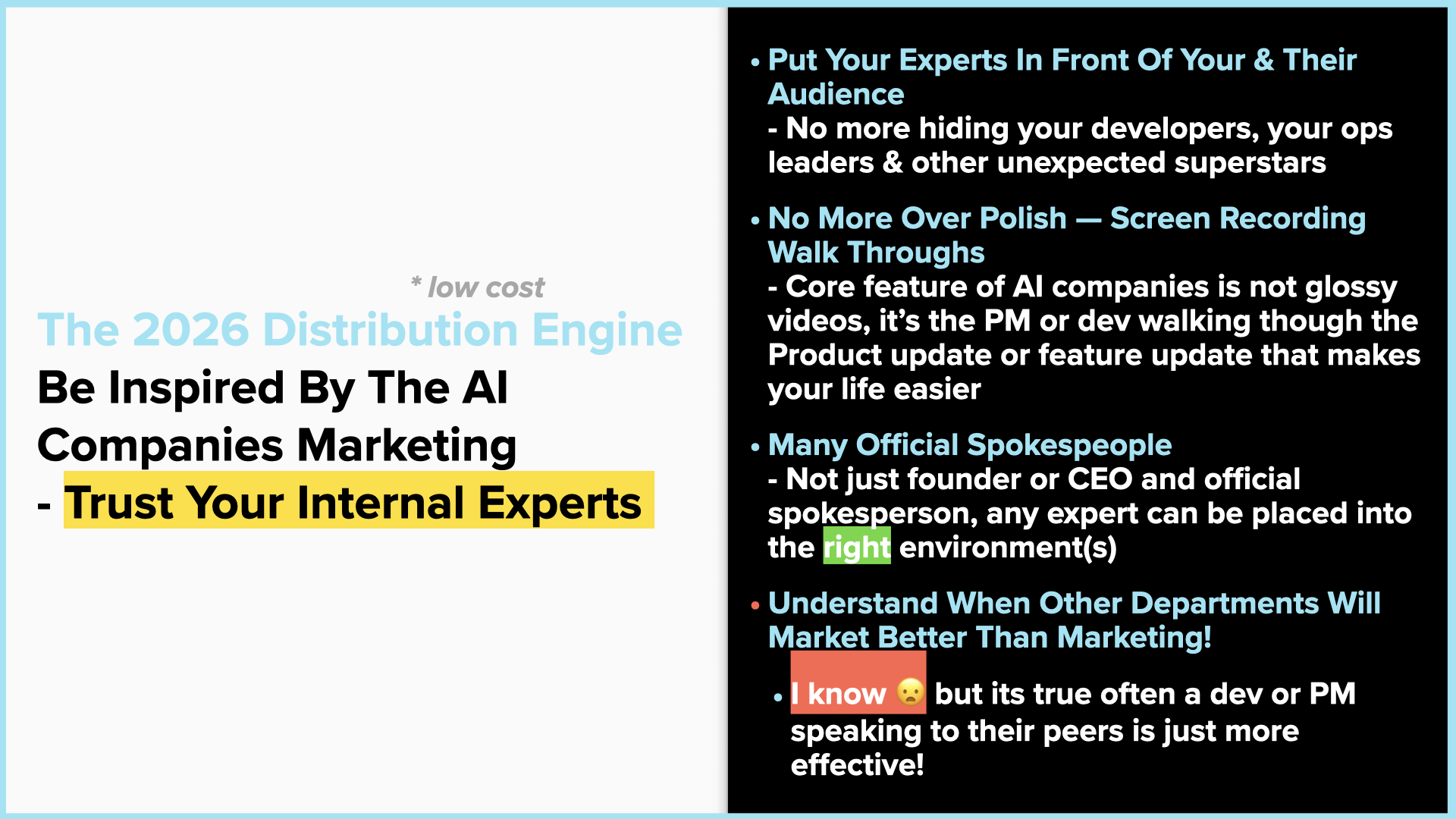
Some of the best results throughout my career have not been Marketing campaigns, it’s included:
Connecting customers with local and national journalists to tell their stories and their families’ incredible stories and we be the passive platform enabling amazing things to happen
Convincing a founder on a hugely popular podcast to tell her story, not the company's story
Sharing third-party data and combining it into a radio ad
Opening up real-time data to enable journalists, bloggers and creators to report as close to real-time
Allowing Hackathons to be covered by industry bloggers and share insights and future beta’s
Enabling our press team to write articles on behalf of journalists
Asking a specialist department lead to appear on the national news not spokesperson or C-Suite members (as they would connect much better with the audience)
And me speaking at a conference and having a huge spike in site and app usage
Moving forward, if you struggle with storytelling and getting your stories to be told, be inspired to think differently, understand how information now travels and enable others to story tell on your behalf.
Need Help?
These topics are often discussed in CMO coaching, and while coaching execs, happily get in touch if you need help or want to create your storytelling engine.
TLDR Version
Let others tell it: The strongest corporate stories often come from creators, customers, KOLs, and unexpected voices; direct product mentions aren’t required.
Operational support matters: Storytellers need a supported “storytelling engine” with workflows, curation, and exec backing; without it, quality and consistency suffer (& often most methods of storytelling won’t make the light of day)
Clipping is an essential part of your storytelling engine: Turn one interview or moment into tailored clips per channel and audience; match format to message to break through fragmented attention. You don’t have to be the one clipping, but you can reference, address and remix
Decide the response: When a story breaks, choose to amplify, ignore, comment, reward, or repurpose; each choice shapes narrative and brand trust. Your loyal customer won’t care about a clip, but many other audiences will
Media company mindset: Be inspired by sports - highlights, fan TV (your biggest fans and critics), tribal remixing & even leaks (most are engineered) you can now use internal creators to spark ripple effects across fans, pundits, and haters.
Your best marketers aren’t always from the Marketing department now: Developers, specialists, founders, your customers, and press teams can & will outperform traditional marketing via authentic stories, data access, and real-time coverage.
