The Storytelling Engine Companies Now Need
In this week’s Marketing Unfiltered, I wrote a detailed post on why and how companies can build storytelling engines and rewrite old rules to fit today’s new media landscape.
I have since added the Pros and Cons below the article to help shape your thoughts and potentially build out a storytelling engine for your business.
This is not about flooding your customers or spraying and praying with social media updates; it is ensuring your business creates (and, importantly, curates) compelling content moments for your customers with a commercial lens.
Storytellers Are Your New Commercial Weapon

Many founders think they are Steve Jobs.
They think they can go on the biggest stages and be entertaining, charismatic and wow a crowd in person and on the event video. But they don’t…
Old PR Is Not Modern Storytelling
To a point, founders have been conditioned to think this by other founders, podcasts, and industry press.
Many comms and PR teams follow two strict rules:
They are official spokespeople and only they do the talking
Only the CEO and hand-selected spokespeople can speak formally. Podcast appearances, speaking gigs and interviews all need approvals.
New Media New Evolving Landscape
Neither of these is ready for new media; very few would last more than 15 minutes on a top-tier podcast, this world was built for 2-3 minute interviews segments on radio and TV stations; their status would be removed with one prying question, and the strict company guidelines would restrict any leeway.
With all this said, Brands are actually more elastic than ever before. Brands can dip into the news and leverage, they can refuse to comment, they can push hundreds of messages out about their latest product launch, they can come back from manufactured “viral” clips and Brands can now engineer popularity by understanding their market and always have the chance to pivot away.
Cultural Impact
There is no monoculture; it has become thousands of subcultures. The bifurcation of feeds and content is both an opportunity and a threat.
This is why the movement to Storytelling Teams is happening.
We saw a push for storytelling teams just before Christmas, with well-known PLG companies pushing the trend forward, as Notion did, basically rebranding their Marketing teams
“We merged our internal comms, external comms, social, and influencer teams into one: the Storytelling Team”
I love Notion, but it's a narrative in rebranding Marketing, again ;-)
Let’s Play Storytelling Out
Recently, I broke down the different ways and formats you can storytell on:
The product
The SKUs
The service
The packages
The impacts
Cultural impact
Economic impact
Customer stories
External customers
Internal customers, i.e employee stories
Scratching your own itch
Founder stories
Company leaders stories
Leaked screenshots
Highlighting the nuance
Leverage data
Most often, internal data
Integrating external or survey data
A commissioned documentary (on Channel4, Netfix, YouTube)
Screenshots and allowing stories to come from screenshots (underutilised)
As you can tell there is huge opportunities in creating, curating and remixing content and Product information. A storytelling company will have a field day and be inspired for these options, not be intimidated by the list.
Corporate storytelling is not about more video content, copying competitors, prettier decks and more social content; it is about creating momentum that moves revenue, reputation and relationships.
Why Storytellers Now Matter Commercially
Most firms still look to the CEO, founder or official spokesperson to “do the storytelling” then wonder why company stories stalls and brand salience flatlines.
Scaling your founder, CEO or spokesperson is hugely limited, and the things they say or even hint at have real underlying implications, so what companies are questioning now:
How do we scale this?
Dedicated storytellers change that because their job is to turn products, services, customer experiences and data into narratives that buyers remember and act on. The outcome is sharper demand, higher conversion and internal alignment around what really makes you distinct.
Storytelling should sit inside the commercial engine, not on the edges in “comms.”
When storytellers are close to product, sales, customer success and finance, they can show how your work actually lands in the real world, from cultural impact to economic value.
Done well, your stories start to pre-handle objections, compress sales cycles and make you easier to buy.
Designing A Storytelling Engine, Not Another Campaign Or Interview
The real miss in most corporate storytelling is operational.
Leaders talk about “being a media company” and then starve storytellers of context, access and support.
If you have worked in a company on the stock market, you’ll know how much you are and are not allowed to say… and how much you are restricted to say, and narratives are built for quarterly earnings and Product launches.
The result is flooding social media with trend-based fluff, sporadic content that looks fine in isolation but never compounds into the pipeline or share of voice.
A storytelling engine takes one moment and turns it into multiple assets tuned to channels and audiences.
Marketing’s problems often come from our approach to channels and messages:
Over saturating channels
Concentrating on an ill-informed ICP or persona
Creating ask fatigue (asking our customers for more, buy more, do more, download more) not solving problems
And important how we have engineered comms to be one-to-many and not smaller more relevant messaging
The engine should include:
A killer interview with the founder
A customer win and quick snapshot of why, not huge long case studies and long videos
A product release that answered really specific problems
A strong internal point of view or the the anti view, these can be sliced into clips, posts, emails, podcast segments, internal narratives and talk tracks for sales.
The commercial outcome is simple: more high-quality touchpoints from the smaller chunks of effort (with hybrid AI (this is human + AI) help), with stories reaching customers wherever and whenever they already pay attention.
Let Others Drive The Story
Some of the most effective stories about your brand come from people who do not have “Marketing” in their title.
Let’s be inspired by the waves of AI companies spreading their message far and wide.
Developers showing their work on a podcast, Product Managers sharing a screenshare of a cool trick or feature enhancement, specialists speaking at events, customers interviewed by journalists, industry bloggers covering your hackathon or using your live data, these stories often outperform classic campaigns.
Storytelling comes from Product usage, it’s engineered and built into the Product build ethos, it comes from the customers and users who find great prompts and share across social, newsletters, and YouTube videos and huge numbers try them, edit them and share again.
This engine has been critical to Google Gemini’s success, not just a stronger more integrated product and worksuite.
This shift is from “how do we talk about ourselves” to “how do we design moments other people want to talk about.”
When you connect customers with media, open up data, invite creators behind the scenes and equip internal experts to speak, you create a mesh of independent voices reinforcing your positioning.
Your CEO can add top level and top line revenue by adding tactical perspectives, appearing on core key interviews and industry podcasts and discussing core areas within the earnings reports or on that leaked pitch deck or internal email…
That network effect shows up as lower paid media dependency, higher credibility and a brand that feels alive in the market conversation.
These engines have to be built - they are rarely earned!
Outcomes-First Decision Making When Stories Break
In a feed-led world, stories about you will surface with or without your involvement.
A niche TikTok creator, a respected researcher, a well respect sports person, a reality TV star or a fan account might create a moment you could never plan for but help to drive commercial growth.
A quick personal story: The beloved Scottish comedian Kevin Bridges shared his dislike for our pages being everywhere, thanks to the meticulous work we engineered with sharing functionality front and centre of the Product, paired with our Press efforts and putting our customer success first throughout the business (thanks Kevin, for one of my highlights of my career when you covered this in your BBC standup special), I have never received as many WhatsApp and DMs about the product we built and many have borrowed the mechanics over the years.

The question for leaders is not “do we like this” but “what outcome do we want from this.” Unfortunately we were not in a place to truly capitalise like anyone would be today.
You have a serious set of levers you can pull: amplify, ignore, comment, reward, repurpose.
Each comes with trade-offs for trust, reach and long-term narrative but creating an engine and newsroom to be proactive will drive the right Marketing goals to be set and drive business change.
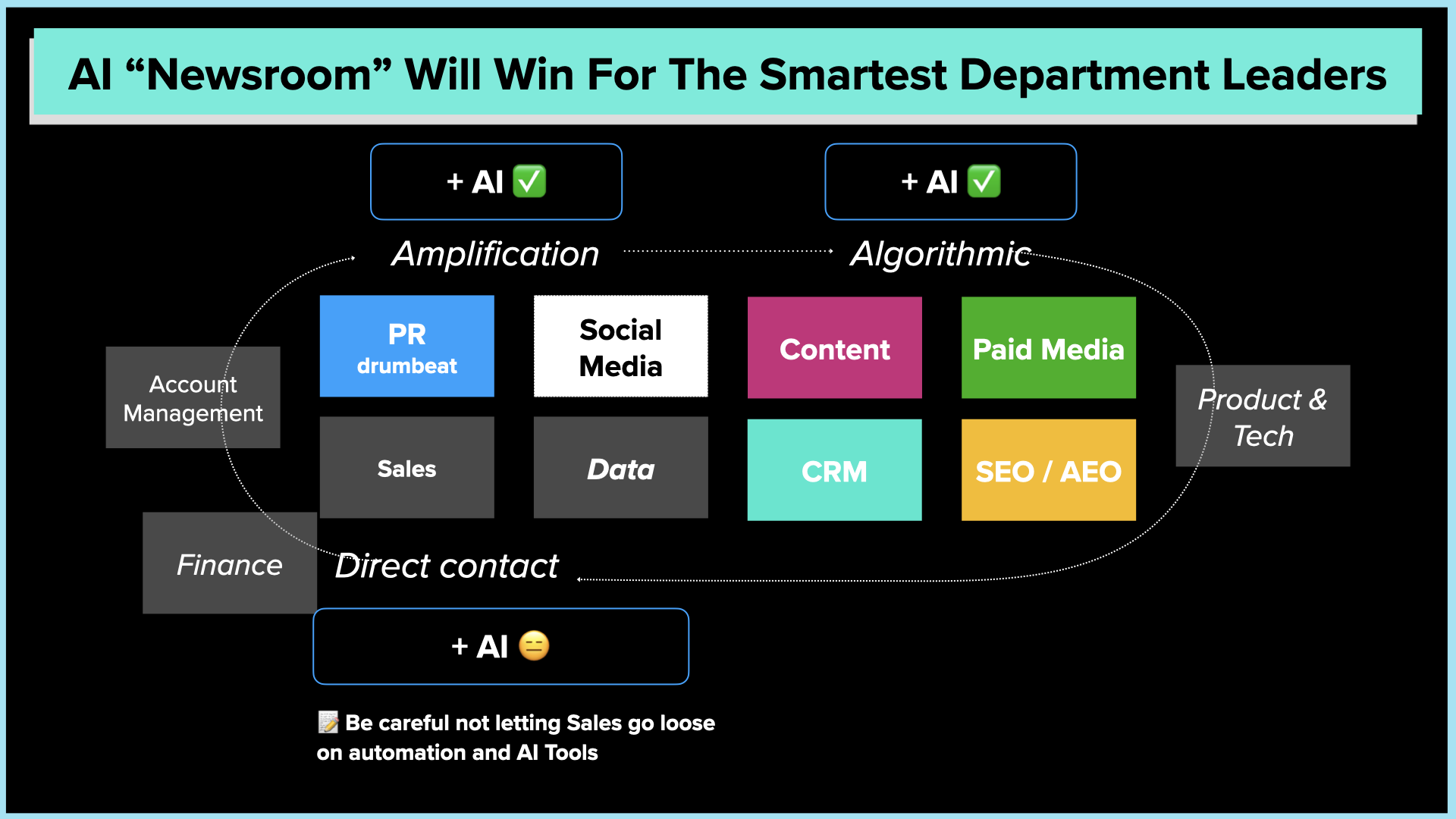
This is a slide I share in conference talks, building out a newsroom approach to Marketing has helped me win in many different businesses
A loyal customer might not care if you stay quiet on a clip, but future customers and partners will often be watching how you handle it.
The way AI is surfacing brands and answering prompts means you’re response might just be the difference.
Treat these choices as strategic, not reactive, and you turn random mentions into deliberate connection and reputation building.
Acting Like A Modern Media Company
Sports are the clearest illustration.
Clubs never rely on one press release or one interview (although I bet many wish they could); they create continuous waves of highlights, behind-the-scenes content, fan channels, remix culture and, at times, manufacture leaks to keep their story moving or moving another narrative along.
They use internal creators, staff, players, legends, pundits, fans and even critics to keep attention and emotion high.
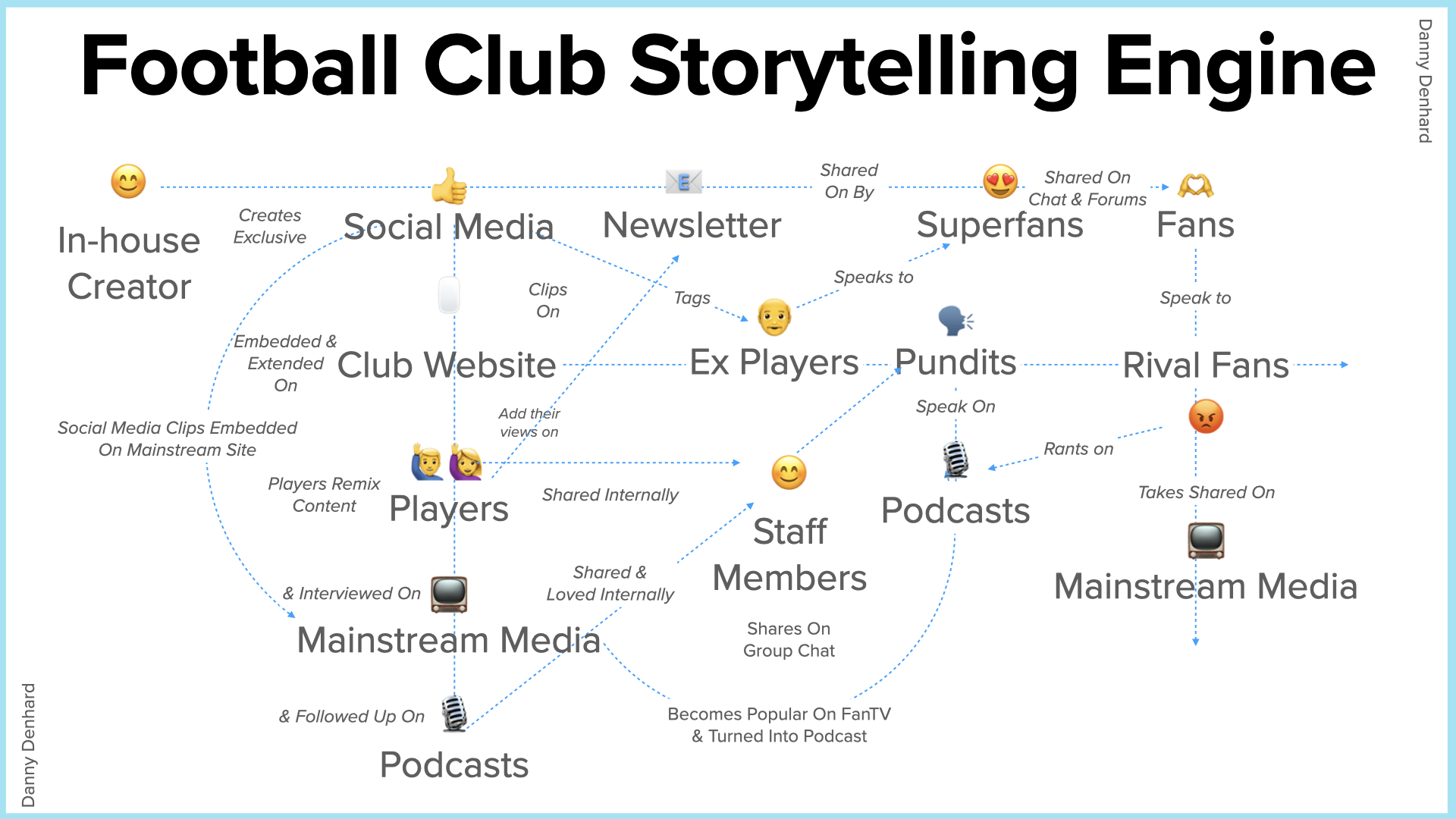
Just one example of how Football leverages storytelling as its engine
The UFC have been front and centre of this over the years, (just look at their YouTube) they have made every channel work for them, they have made the fighters tell their stories, their coaches become a part of the fight narrative, the media and media personalities have their say, they incorporate sponsors into the build up and they overly invest in their own staff’s part from fight picks, to the way they interact with the fighters to who sits front row close enough to the octagon to be hit with the blood of the fighters mid fight.
2 Examples: The UFC have former world champions now interviewing sporting royalty to build deeper content libraries and fan connection, they run a week long fight build up series called Embedded to feature the main fighters, their camps and offer exclusive behind the scenes access.
Media Business Leaders
One company that has accelerated this in recent months is a16z, the VC leader, they have designed the use of channels, from sharing opinion pieces, promoting chart of the week on their blog and Substack, to podcasting with their founders, their internal arms of the business they repurpose their content across every relevant medium, to republishing any a16z partner or analyst guesting on other podcasts on their own podcast feeds, to each team member being active across social media not to flood the zone but to offer real value to their customers (even their competitors) and fans.
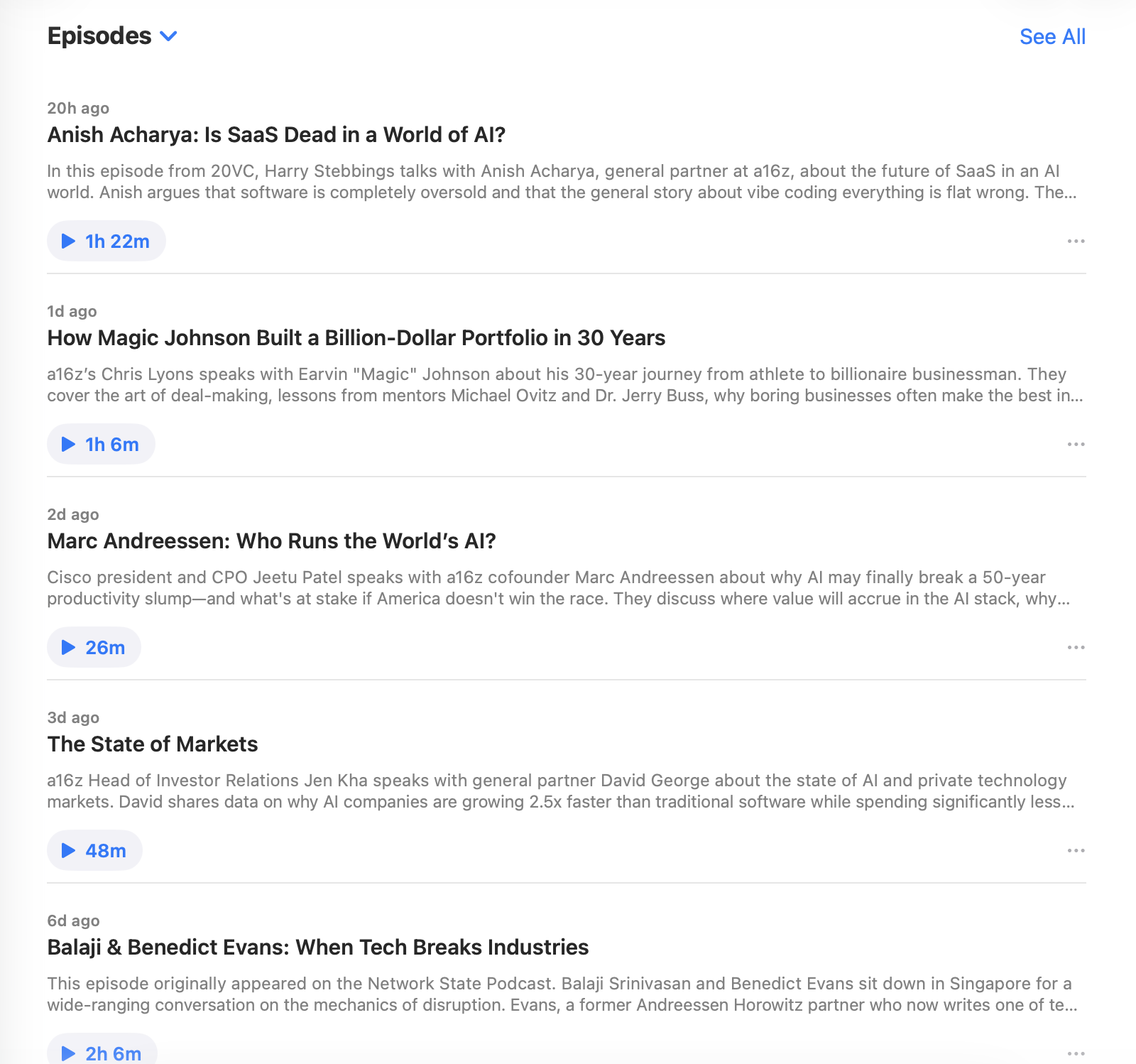
This week’s podcast feed highlights their value commitment, with a mix of their own podcasts, guest appearances on other podcasts and sharing interview from large conferences and from their own internal conferences.
Loving ❤️ Storytelling: Lovable has fully embraced company-wide storytelling, from the founder’s prolific social media shares, to developers sharing their vibe coded projects and talking deeply about their releases, to their Growth team members (check out Elena’s substack - it’s packed full) embracing storytelling to advance their startup.
Any ambitious company could adopt the same mindset.
Put an internal creator or storytelling lead at the centre, wire them into leadership and teams, and task them with turning everyday operations into story assets that support growth.
When you judge storytelling by its impact on pipeline, pricing power, hiring, retention and partnership opportunities, it stops being a nice-to-have narrative exercise and becomes a core lever of business performance.
Founders and leaders love to say they’re a storytelling business but then leave storytelling buried in comms decks, the comms team to red pen most interesting and compelling stories and be hidden in campaign calendars and social media spray and prays.
The next era will belong to companies that wire storytellers into the commercial engine, let customers, builders and experts carry the narrative, and build systems that turn one smart moment into a hundred meaningful touchpoints.
In this market, you’re going to be targeted, clipped, screenshotted and remixed it would be smart to be the driver of this bus.
If you’re serious about this, make one decision today: who is your internal storytelling team, and what’s the first story you’re going to engineer around them in the next two weeks?
This single decision is how you stop admiring other people’s stories in your feed and inboxes and start owning the one the market tells about you.
The Pros And Cons
Why storytelling teams are a commercial weapon
Story moves money: Stories turn product features, data and customer wins into narratives that actually shift pipeline, pricing power and retention instead of just “awareness.”
Scales beyond the CEO: Relying on the founder as chief storyteller doesn’t scale; a team lets PMs, devs, CS, sales and customers all carry the narrative.
Built for the attention economy: Old PR was optimised for 2–3 minute TV hits; modern storytelling is optimised for clips, carousels, threads, newsletters and live screenshares.
Multiplies each moment: One founder interview or product release can become dozens of tailored assets (clips, posts, emails, sales talk tracks) instead of a single “campaign.”
Matches fragmented culture: No monoculture anymore; many micro-stories across many subcultures beat one polished hero ad.
Stronger internal alignment: Storytellers embedded with product, sales, CS and finance help everyone articulate the same distinct value in their own language.
Let others sell for you: Customers, creators, staff and partners telling your story build more trust than centralised brand channels alone.
Engineered virality, not luck: Designing “moments other people want to talk about” makes virality more repeatable (screenshots, live data, prompts, backstage access).
Lower paid media dependency: A dense mesh of organic stories cuts how much you need to rent attention via ads.
Defensive in a screenshot age: If you know you’ll be clipped and remixed anyway, it is better to incorporate, design and seed the narratives yourself.
AI amplifies the effect: Search and AI summarisation increasingly surface “what people say about you”; having rich, consistent stories gives those systems something good to latch onto.
Hiring & employer brand: Internal storytelling (employees as characters, not logos) makes you more attractive to talent and partners.
Proven patterns in sports & media: Clubs, UFC, and firms like a16z show how continuous, multi-channel storytelling compounds brand and deal flow.
Flexible in crisis/serendipity: When an unexpected mention hits (like my Kevin Bridges story), a prepared storytelling engine can quickly decide: amplify, comment, reward, or ignore.
Easier experimentation: Story units are smaller, cheaper and faster to test than big-bang campaigns; winners can be scaled and repurposed.
The risks, downsides and “yeah but” side
Hard to operationalise: “Be a media company” sounds romantic; in practice it demands processes, editorial standards and enablement most firms don’t have.
Noise without strategy: A storytelling team without clear commercial outcomes becomes a content factory that floods feeds but doesn’t move revenue.
Governance vs authenticity tension: Regulated or listed companies still need tight controls; scaling many voices can clash with disclosure rules and legal risk.
Founder insecurity & ego: Some leaders won’t cede narrative control, which can neuter storytellers or keep everything stuck behind approvals.
Channel over-saturation: Without discipline, you can over-post, create “ask fatigue” and burn out your audiences.
Measurement is messy: Attribution for “stories” (vs last-click ads) is fuzzy; CFOs may push back if you can’t link the engine to pipeline and pricing.
Talent is rare and expensive: Great storytellers who understand product, market and distribution are scarce; mis-hiring here is costly.
Risk of personality cults: Over-indexing on a few internal creators can backfire if they leave or behave badly.
Unequal internal load: Non-marketing staff asked to “share more” can feel exploited or distracted from their core work.
Trend-chasing trap: “Storytelling” could become the latest rebrand of Marketing, Comms or Brand in startups ready to make noise, without any actual change in decision-making or access.
Not a fix for weak product: No narrative can consistently rescue a product that doesn’t solve real problems.
Cultural mismatch: Highly conservative, low-variance industries may punish experimentation and public vulnerability more than they reward it.
Short-term hype vs long-term trust: Aggressive engineered moments can win attention now, but erode credibility if they feel manipulative. Brand is critical, being seen as the brand, being known as the brand in your space and being connective is more important than ever. Build and be the Brand!
Over-index on top-of-funnel: Easy to live in clips and virality and underinvest in the unsexy stuff (Marketing Ops has always been important, it is especially important in the AI era - channels and disciplines like sales enablement, onboarding, documentation will help you win).
Opportunity cost: Every hour building a storytelling engine is an hour not spent on pricing, distribution, or product—this only pays if you commit and stick with it.
