This is my post for Marketing Unfiltered this week. Sent out as a newsletter every Friday.
The 6 Key Trends To Keep An Eye On & Work On For H2
By Danny Denhard - Exec Coach / Consultant / Advisor

H1 was the warm‑up. H2 is where the real work starts.
The noise around AI, agents and “the future of marketing” has hit a new peak, but underneath the hype, there are a handful of very real shifts already changing how customers discover, decide and buy.
The brands that win over the next 6 (to 12) months won’t be the ones chasing every shiny tool, LLM update and spreading themselves too thin; they’ll be the ones quietly rewiring their commerce, their funnels, their data and their creative to be ready for both humans and, in some cases, machines (well, agents).
Below are 6 trends I’m watching closely - from agentic commerce and claw‑driven workflows, to the return to full‑funnel marketing, hyper‑personalisation and native ad platforms, and what they actually mean for how you operate in H2.
There are, of course, a few realities to factor in:
The macro environment and shifting consumer spend, alongside realignment towards AI budgets, will shape how fast any of this moves.
Talent and org constraints will dictate how far you can go when you’re dealing with limited headcount, cross‑functional blockers and the need to upskill teams (spend those L&D budgets wisely).
SMBs will have to play to their strengths – local presence, referrals, word of mouth, rather than over‑investing in agentic and unproven platforms as larger competitors and industry leaders can and will.
Regulation will sit in the background of all of this, especially with Alphabet, Meta, Amazon & the major AI providers under sustained scrutiny.
These are not just predictions but practical shifts you’ll feel in your numbers, your org and your roadmap in the next two quarters and into 2027.
Agentic Commerce
Like AI, agentic is becoming table stakes. Agentic is not a new trend, nor is it something we have seen huge evidence of working yet, but there are two important tests and shifts underway:
Google are testing with Gemini Auto Browse (through Google AI Pro or Ultra subscription), starting with the Pixel 10 and Galaxy S26 devices. The agent can perform multi-step tasks on behalf of the user, with booking a parking spot, re-ordering items, and filling out forms without human interaction required.
Universal Commerce Protocol (being dubbed as Frictionless Shopping) is now fully open. Co‑developed between Shopify & Google and is backed by Amazon, Meta, Microsoft, Stripe, and several major retailers, it’s available to any developer with no approval flow. In practice, that means every eligible Shopify merchant’s catalogue is now syndicated by default into ChatGPT, Copilot, Google AI Mode, Gemini, and the Shop app. Shopify claims AI‑driven discovery through catalogue converts at roughly 2x scraped product data, and there’s now order attribution that shows exactly which AI channel drove each sale. For the first time, “AI brought us a customer” can show up as a clear line item, not fuzzy assumptions.
The speed of adoption will be lower and slower, but as we have witnessed since the start of AI, there will be pressure on Marketing leaders to be first and fast in driving their business forward.
SMBs will feel the demand to be part of this, however, the investment required may be too high and doubling down on your strengths and referrals might make all the difference. This is where you will have to choose your battles wisely.
Expect more demand from large providers to shift your website to be ready for agents and humans, with requests on API’s, structured and markup data and enabling automated transactions. Product will have to have a busy quarter ahead!
Pressure On More Full Funnel Activity
I’ll say it, CMOs will be under more pressure to run more activities, especially at the top and middle of the funnel.
The top of the funnel and middle of the funnel have been under scrutiny throughout the last decade on the over-focus on performance marketing. With the pressure to influence AI and LLMs, there will need to be a stronger demand to use full-funnel marketing techniques and tactics.
Video will continue to grow with short-form video used across platforms, mid-form content created to cut through snackable and forgettable content and long-form will see more investment as a scalable way to create more video content and chop up into clips and be remixed by customers.
We will see smart brands move towards multi-platform discovery (via social, AI chat, and looking to leverage visual search).
If “41% of Gen Z users check social platforms before traditional search engines” there will be continued emphasis placed on social search and enhanced discovery.
Measurement and attribution in this phase is going to be more of a challenge; mediated discovery and tracking citations and recommendations are going to continue to be hard and messier than H1. Working through attribution and measurement will be paramount.
There will be internal battles proving social commerce and native shoppable experiences are worth the extra time and investment required. Many will start to experiment in retail media networks (RMNs) as they continue to grow and see continued large investments.
Leadership teams, PE Owners and boards are notoriously short-term on demanding performance and often rightly so; however, in this time period, the demand to do more with less is very real, as is showing you are influencing AI and LLMs so continuing to influence AEO across multiple channels as well as signalling brand strength, will be critical.
Hint: Consider how you will reward customers and look to tactical uses of treatonomics (rewarding customers for loyalty and repeat purchases).
Expect more deep-rooted experiences with existing customers, events (local and national), meet-ups and investing in deeper two-way value exchanges. Many brands will look to build more community and promote micro-communities (even Mr Beast is building a creator community app), especially with the vocal backlash to AI by younger and older generations.
If you are enjoying this post or want to help your colleagues, please hit share
or copy and paste https://www.marketingunfiltered.co/p/87 into your department slack or Teams channel or favourite marketing group chat
Use Of Agents & Claws
Claws and agents are being pushed hard by industry influencers and AI brands. Despite the security risk and IT blocking, shadow AI usage is increasing, and the pressure to have teams of agents or claws is on the increase.
Many startups and scaleups should expect pressure on using agents and having a huge percentage of work automated, while larger firms will be battling internally with allowing safe use of claws or creating safe environments to be able to test claws.
For the majority, the next 12–24 months will be more about operationalising this, augmentation, orchestration and governance before wholesale automation but as we all know we will be the ones pushed to be first.
Safe experimentation will likely be the powerful message for the rest of the year, while we work through blockers, compliance challenges, procurement requirements and proving safe usage. Or, until a major hack or series of hacks happens in agents and claws.
Being informed might just be your competitive advantage…
Citation To Sales ~ Chat → Citation → Sale
We are now in the phase where AEO/GEO should begin to see positive returns. We have to be aware of chat to citation to sales through LLMs. Some major brands are suggesting a positive impact, but many aren’t.
Expect increasing pressure on making investments in AEO work, as the squeeze for ROI from AI continues and not just from token or agent spending.
The operational cost will be high but something you and your team will have to across.
You will have to co-lead on major UX and UI changes, be across constant AEO tactical shifts and making adjustments made to remove AI slop ranking and declining influence of platforms (like we have seen with Reddit and LinkedIn)
Shift to Hyper Personalisation
Something we have all spoken about for years is being able to create more personalised experiences through our products and our marketing, despite changes to third-party tracking and storing data, we are at a point where we can build and create hyper-personalised marketing and product use, helping to connect deeper to our customers.
Something that is being reported by some users is the overly creepy targeting and information being used in ads and product nudges. Be careful that you aren’t seen overstepping or breaking data policies.
While working on personalisation, you will have to measure and track the influence and value being seen.
Expect customer expectations to increase with more sophisticated marketing, look to build direct relationships (through more subscriptions, two way communities and more personalised loyalty programs); unifying data across your touchpoints for more seamless experiences.
One to one will beat one to many and one to all - proving the investment might be your biggest hurdle in coming weeks.
Native Ad Platforms
We are going to see the evolution of native ad platforms in more immersive spaces.
A great example is EA, they have launched their own native advertising platform, allowing brands to be part of the gameplay, with Coach integrated into The Sims, Lowe’s, Red Bull and Visa into EA26. Madden NFL and College 26 is also involved in the early rollout. Expect to see more options, more niche players entering this space, and greater customer value optimisation.
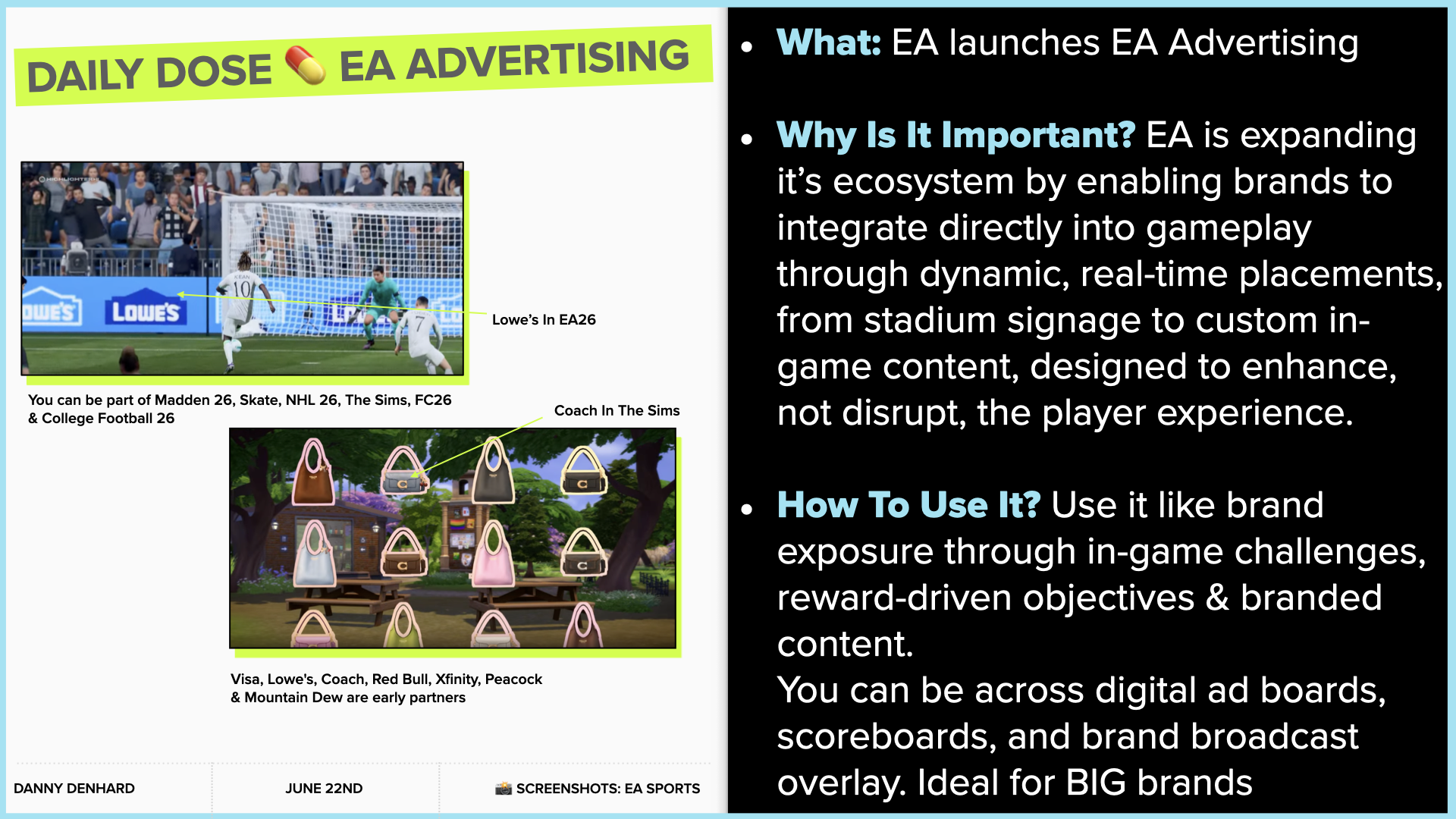
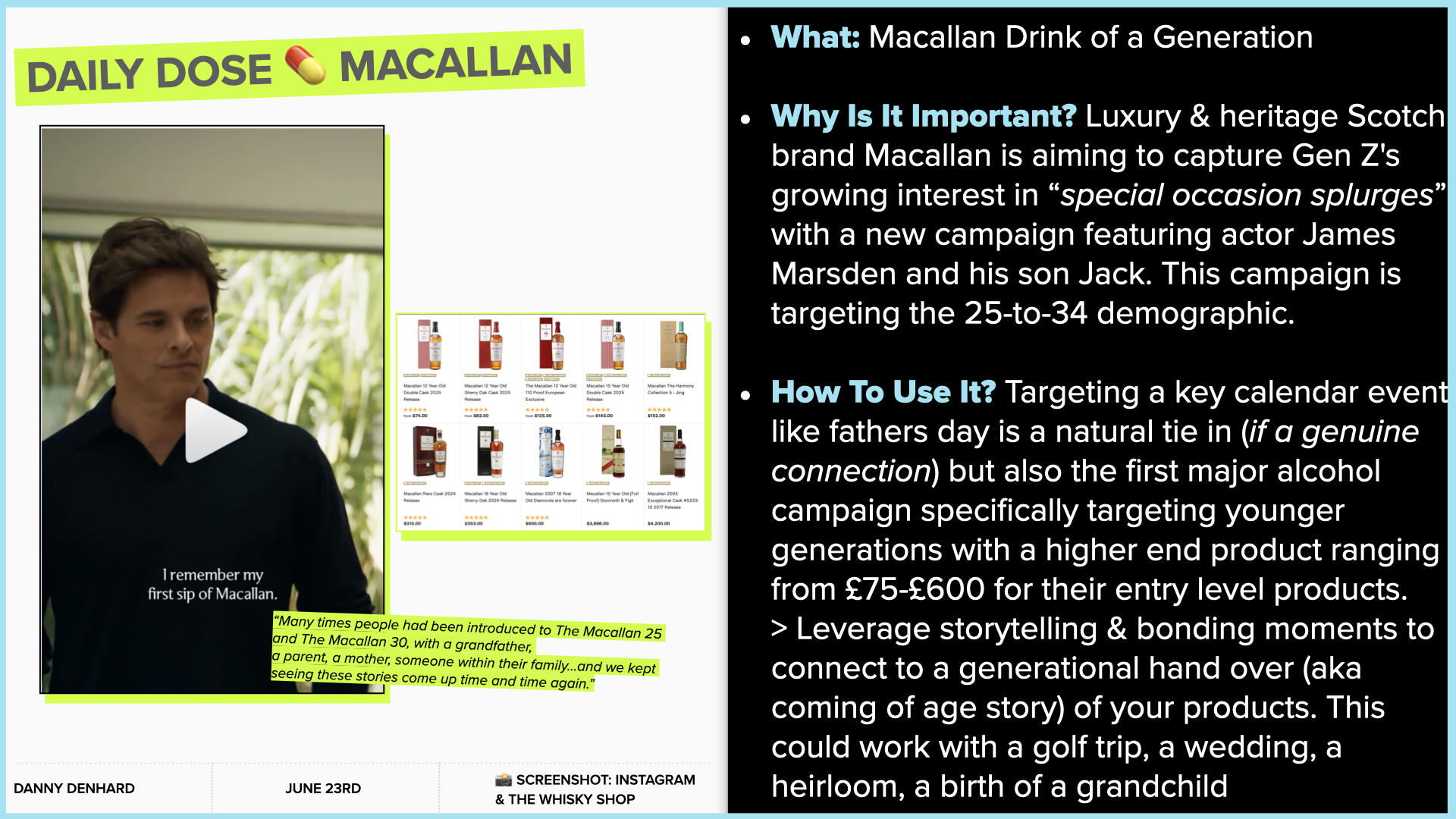
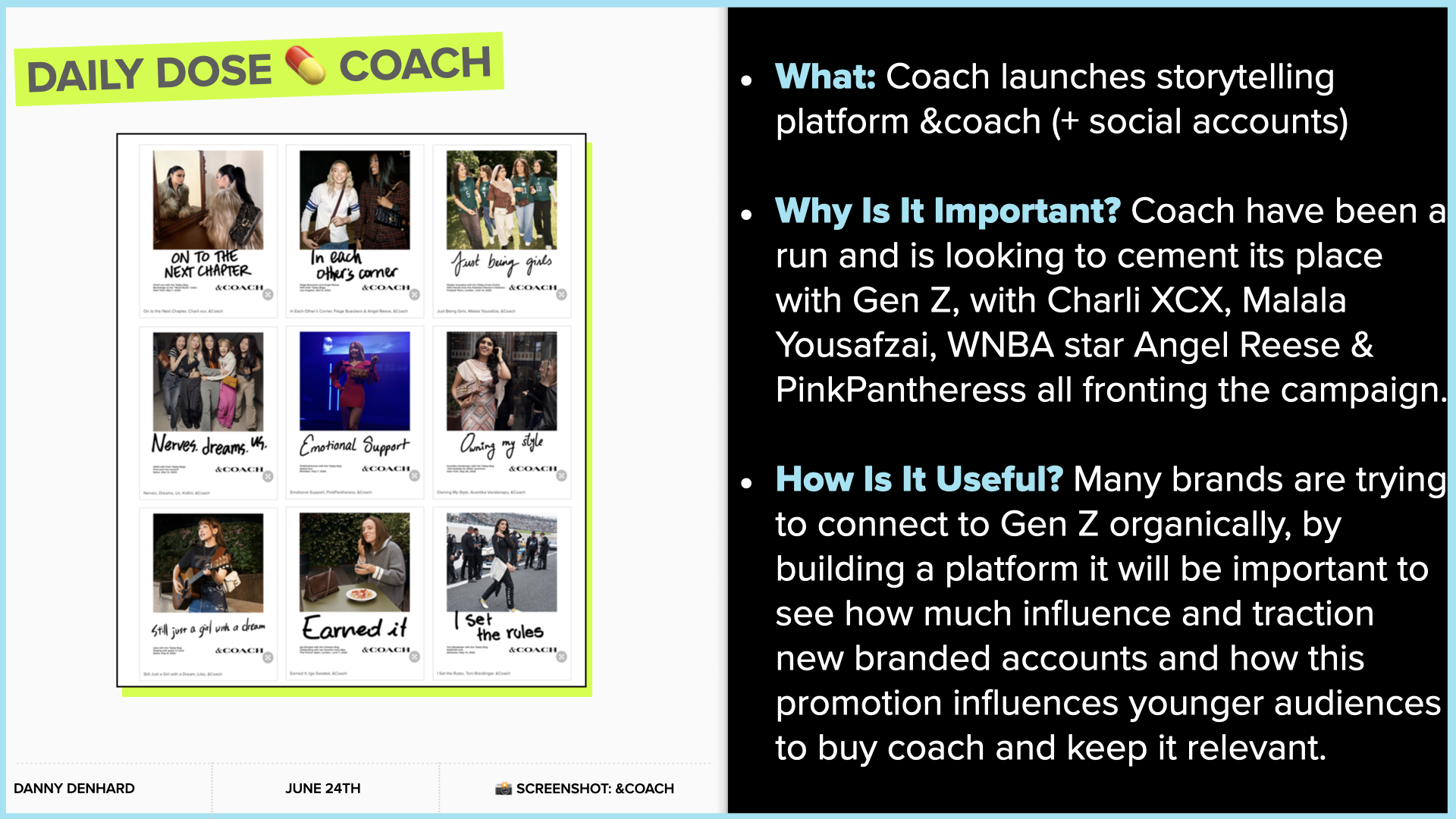
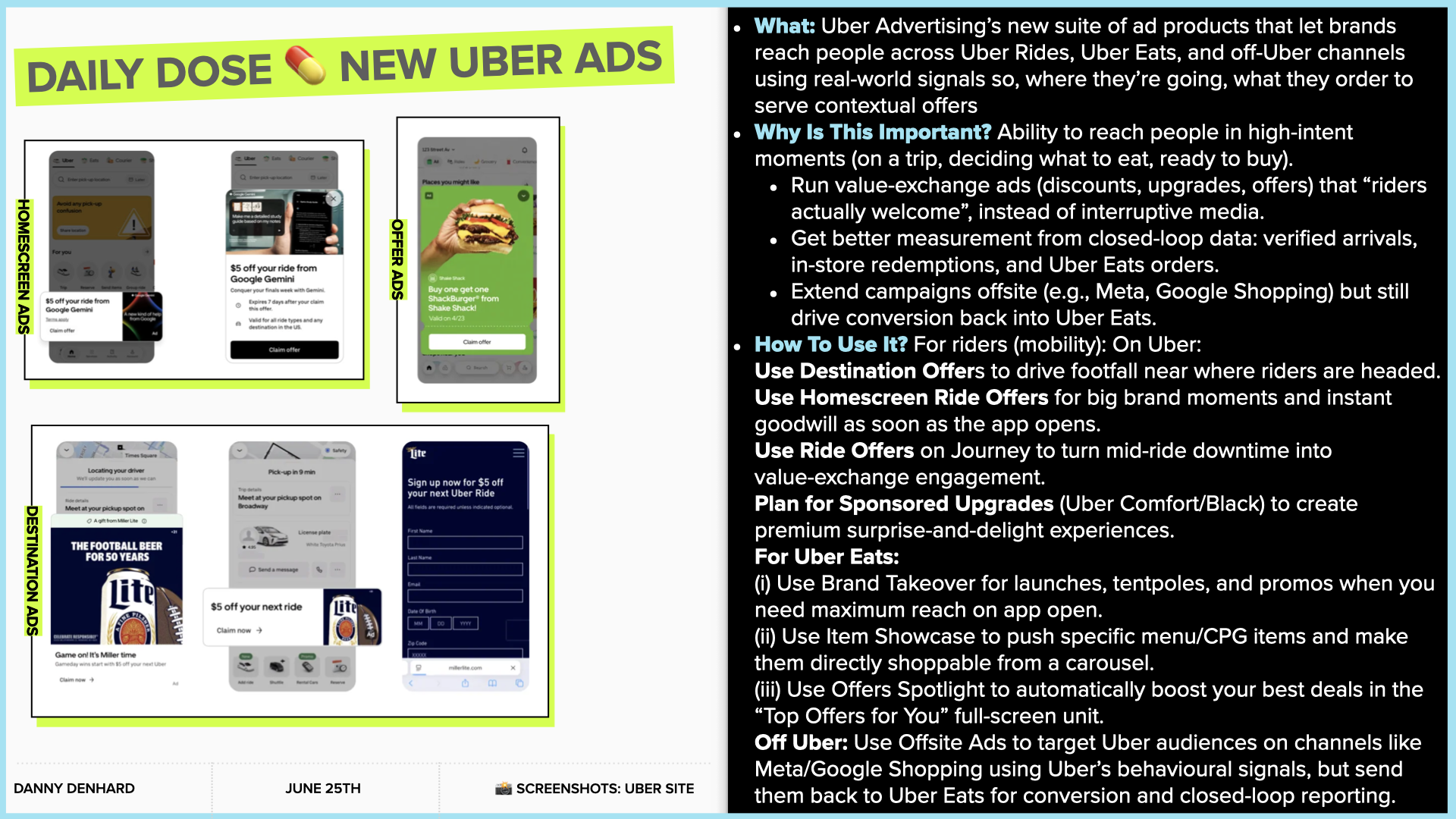
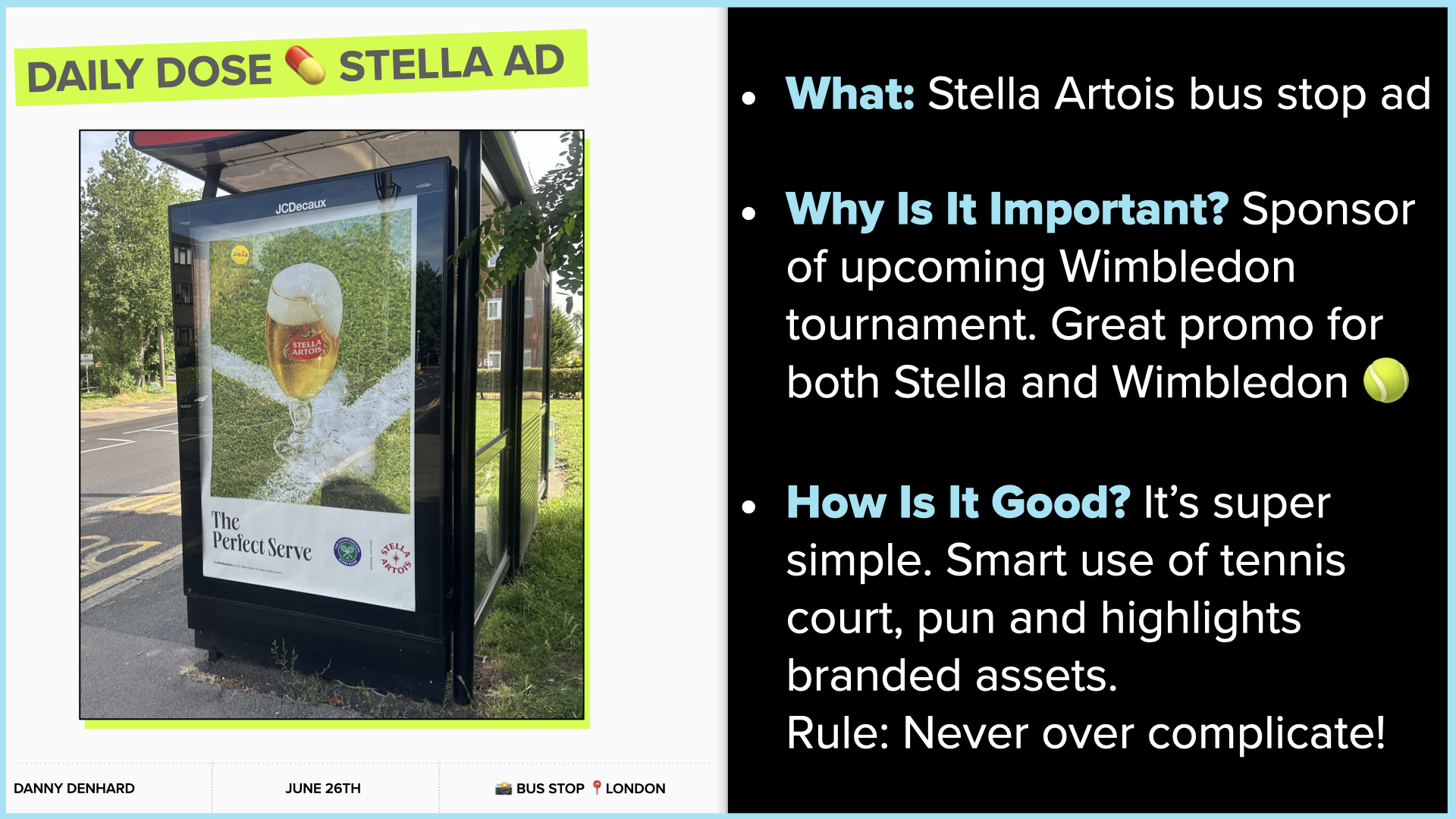
I’ve started a daily dose series, sharing the most inspiring, educational and entertaining campaigns and projects on substack notes and X or here is all of the updates from this week as a Google Slide Deck (or flick through below).
Remember, with native platforms (as we saw with ChatGPT ads) there will be measurement constraints and a huge increase in creatives and outputs.
Native ads (there are some interesting developments happening on the likes of Substack and Beehiiv too) and in‑game ad networks need bespoke work, creatives and measurement frameworks to be built and applied.
+ 3 themes bubbling under the surface to keep an eye on:
AI Glasses - Meta (with their own designed glasses), Google And Snap are all releasing AI powered glasses. Away from the privacy concerns, there is real opportunity to be integrated and the canonical app and product experienced through voice and glass interface
Athletes as product creators not just promoters - there are a number of athletes bringing products to market rather than just invest or be a sponsorship vehicle. Cole Palmer’s Cole’d ice cube products including an Electrolyte ice cubes with GoPuff stands out, while others push into drinks and food. Deep collaboration might just be your new unlock
More algorithmic/AI filtering & summarisation - plan for more aggressive filtering across emails, feeds and social inboxes, expect less tracking, less depth of reading/engagement and AI summarisation to be used where core messages might be missed or overviewed.
Expect AI driven digests to have another wave of influence too.
So in H2/2H, expect to
Continue your optimisation journey for platforms where discovery happens (social, marketplaces, AI tools).
Focus on integration Hybrid AI creativity (aka AI + human creativity)
Improve the use of data + privacy/trust
Be under pressure to increase the use of agents and claws
Use more performance + brand campaigns while connecting full funnel activities.
Look into different ad networks, like gaming platforms, retail media and CTV
Prioritise measurement (attribution, orchestration) as AI and experimentation in a fast-moving landscape.
Reward top performers who will excel at collaborating with AI strategically, without losing authenticity and having a negative impact.
Build defensible moats through deeper relationships with customers through communities, first-party relationships, and distinctive creatives.
If this all feels exciting but slightly overwhelming, you’re not alone!
The gap I keep seeing is never a lack of ideas or tools; it’s the time, support and structure to turn them into a clear plan the whole business can get behind.
If you’re a marketing leader and you want help with stress‑testing your H2 strategy against these trends, translating them into your practical, prioritised roadmap, or pressure‑testing how your team, plan and budget stack up hit reply or email me at mu@dannydenhard.com and tell me a bit about your company, your biggest challenge, and what H2 success would actually look like for you and I’d love to help you.
Thanks for reading, and go and have a great weekend, and we will see you again next week!
Danny Denhard
