The Premier League Sponsor Evolution 26-27 Season
The 2026/27 Premier League season is a clear commercial reset, driven by shifting sponsorship ethics and a more global, digitally led business model.
The most visible change is the voluntary ban on front-of-shirt gambling sponsors.
For clubs that had become dependent on betting money, this has forced a fast rethink of their commercial strategy and how they replace that revenue without over-relying on any one sector again.
Enter The New Breed
Into the void step technology and AI.
As betting brands move off the prime real estate (and in most cases on shirt sleeves), artificial intelligence, fintech (including Crypto), and global enterprise tech companies are moving in.
Clubs like Crystal Palace are already leaning into this, signalling a move toward partners that feel more aligned with the data-driven modern football product.
International Marketing Platform Not Just Sponsorship
These deals are no longer about the UK in isolation.
The Premier League is now the global marketing platform, and brands know it.
Pair the right company with the right player or club profile, and popular international stars can reach audiences across Asia and North America.
The real value, though, goes beyond a logo on the shirts and pre-match shirts.
Shirt deals are now about brand recognition, credibility, and further access, often meaning players fronting campaigns and promoting products they wouldn’t choose to themselves.
The Financial Gap
At the same time, Sunderland are still listed without a front‑of‑shirt sponsor (with Chelsea announcing a 1-year deal with Crypto sponsors USDC on 28th of August and Notts Forest signing with Marex on 18th August).
That gap isn’t just a gap on the shirt; it’s a huge gap in their finances and impacts how they can compete in the transfer market. It’s also a signal of how tough the sponsorship landscape has become for some clubs, especially now that gambling money is off the table for main shirt deals.
Even when a club is underperforming or in the headlines for the wrong reasons, being on the shirt gives a sponsor a form of legitimacy and emotional connection that you would struggle to buy in any other form of advertising or sponsorship. You will see the sponsor across interviews, highlights, clips and extensions on social media.
Classic Shirts & Sponsors Mean Something
Ask anyone who is a lifelong football fan about their favourite shirt, and fans always remember the shirt, the feeling and the sponsor:
Arsenal fans like me remember the classics with JVC, SEGA and O2
Liverpool fans with Candy, Crown and Carlsberg
And if you were a kid like me, I grew up with my local club as Watford that had classic sponsors like Iveco, Solvite and RCI. I also spent multiple paper rounds and pocket money on AC Milan, with the classic Lotto kit with Motta and then the Adidas and Opel combo.
In today’s market there are multiple shirts each year, with home, away and third kits and often fresh re-releases - you have huge local, national and, importantly, international reach and resonance.
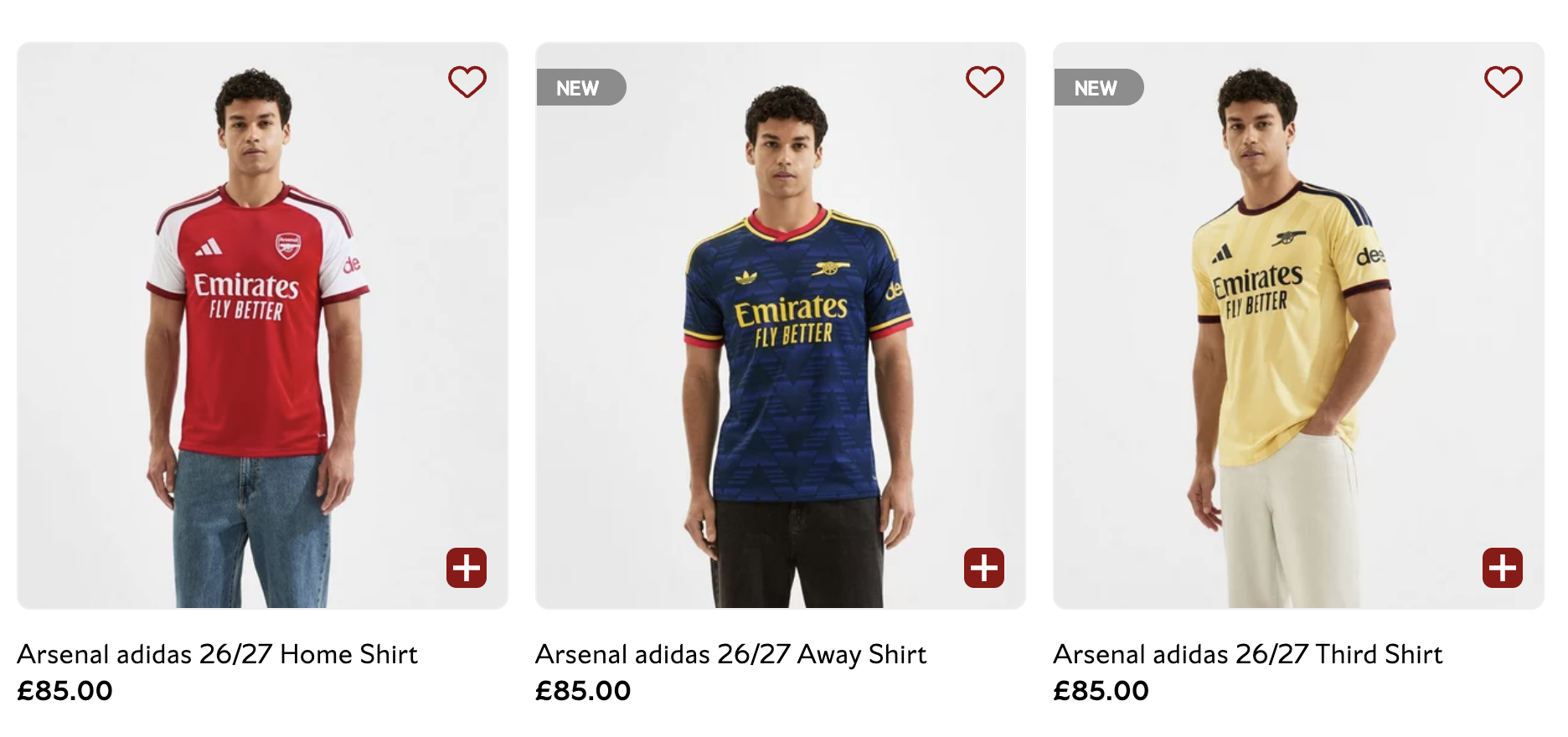
Above 📷 Screenshot of Arsenal Direct - the 3 new kits showing their sponsors, including new sleeve sponsor HR platform Deel.
Platform Play, Not Sponsorship
Front-of-shirt is now just one part of a wider sponsorship ecosystem including:
Pre-match
Training wear
Sleeves
Digital inventory
Beverage
Content partnerships and more.
There is a broader picture:
Arsenal (current champions) have a huge list of official partners who will feature in match days, promotion and social media channels:
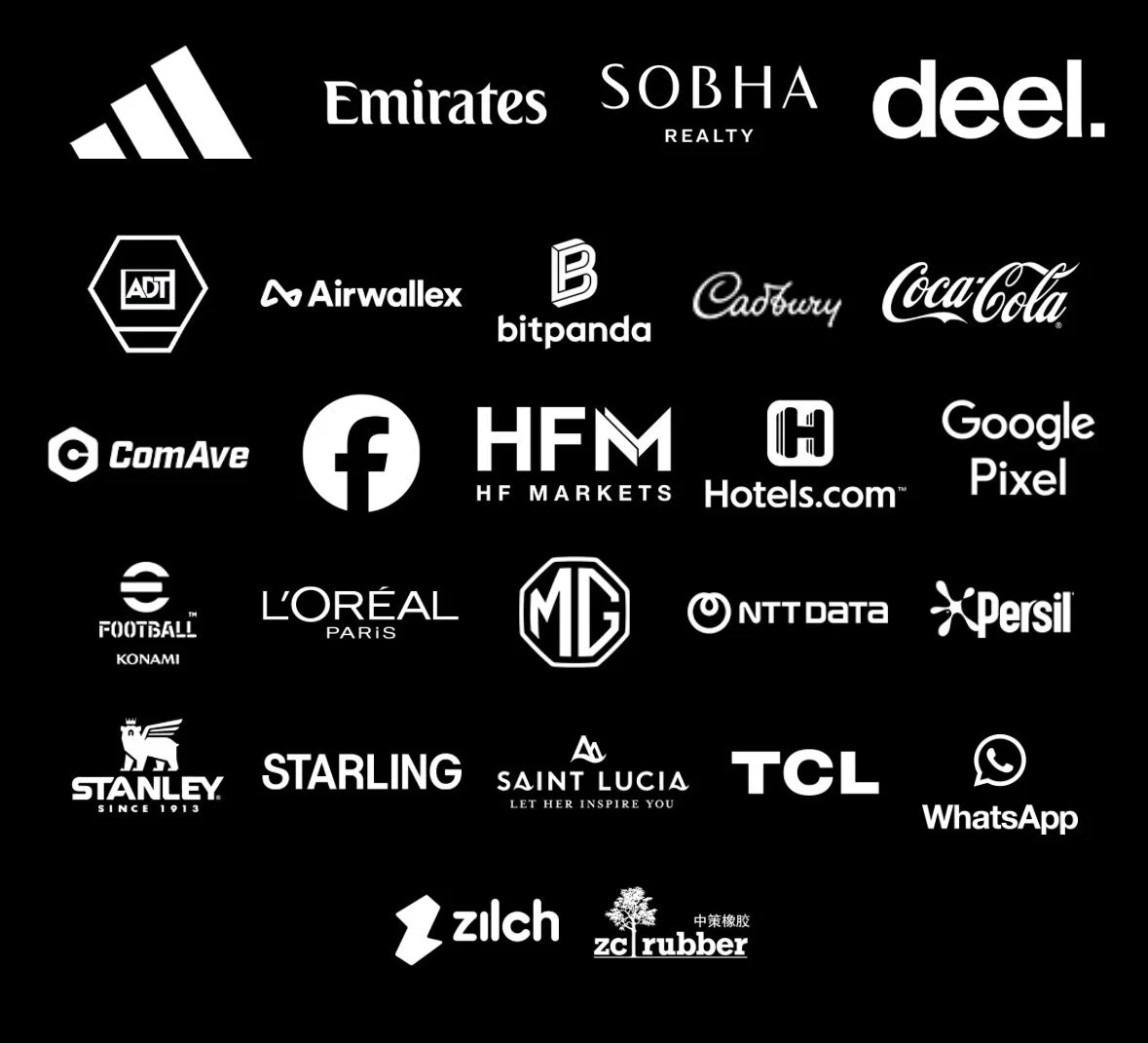
Here is a screenshot from a recent Arsenal email with each logo clickable
Principal Partners
Adidas, Emirates, Sobha Realty, Deel
Global Partners
Adt, Airwallex, Asahi Super Dry, Athletic Brewing Co, Betway, Bitpanda, Chivas Regal, Coca Cola, Comave, Facebook, Guinness, Google Pixel, Hfm, Hotels.com, Konami, L'oréal Paris, Mg, Ntt Data, Persil, Stanley, TCL, Whatsapp, ZC Rubber, Zilch, Cadbury, Starling, Defend Your Tomorrow, Saint Lucia.
These partners will feature in and around the ground, with regular promotions, interviews, podcasts, official and unofficial highlights, and social media activations; the reach is huge and international.
Many partners will be sold through the store and online and inside the stadium.
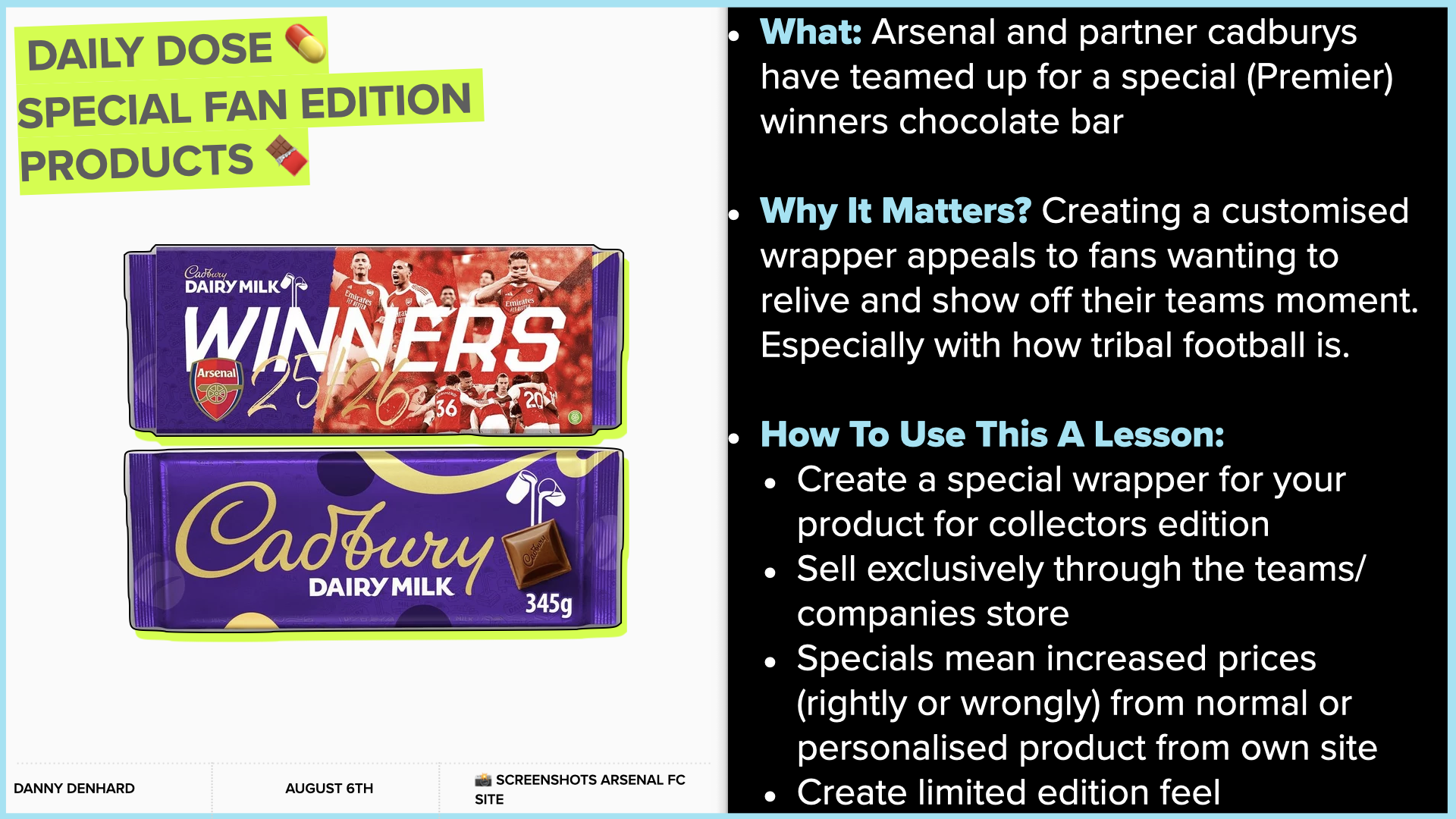
Here is an example that clubs and sponsors work together - from Daily Dose, my daily free swipe file
This is a dedicated tweet on X promoting Travel St Lucia:
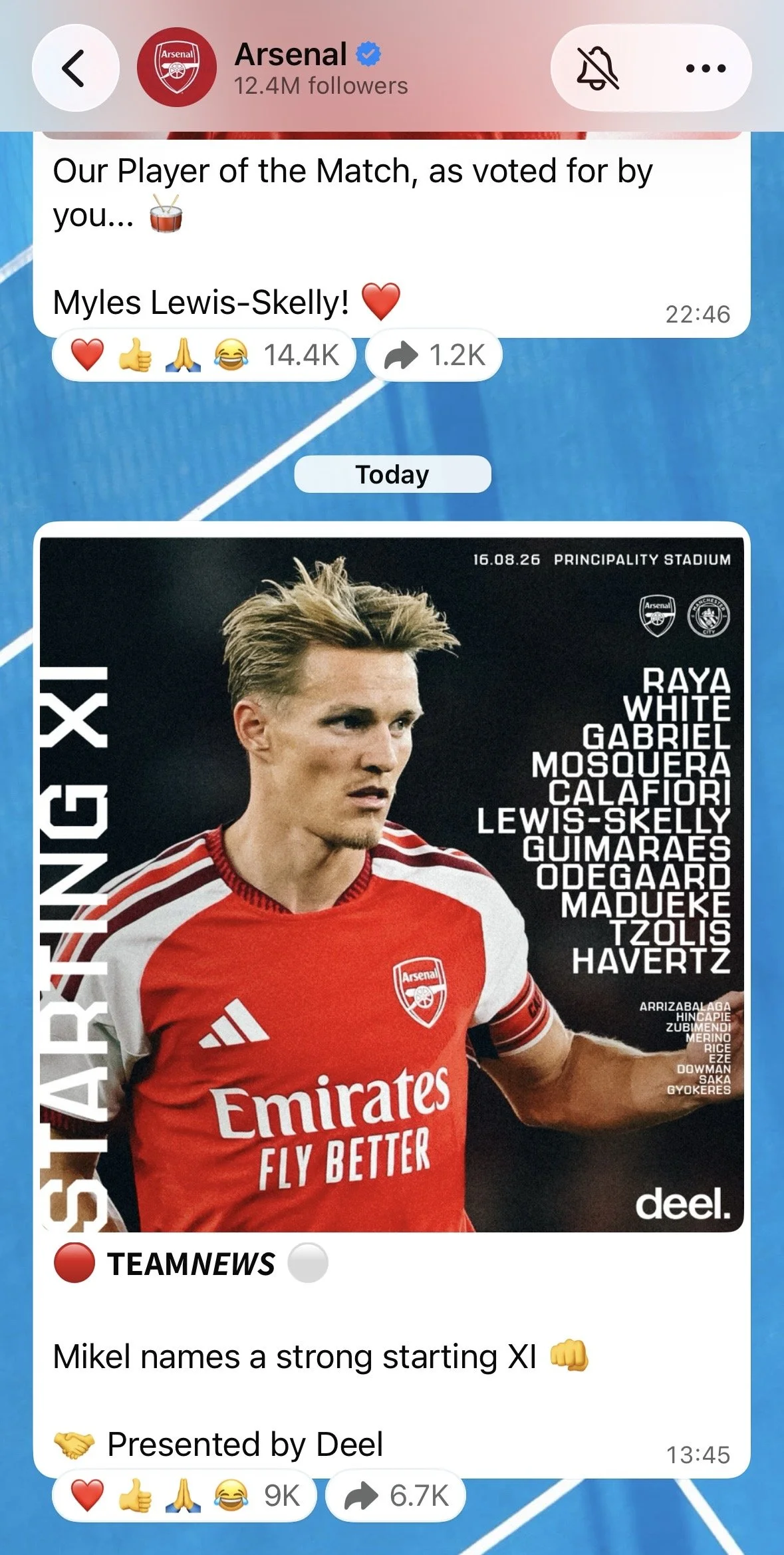
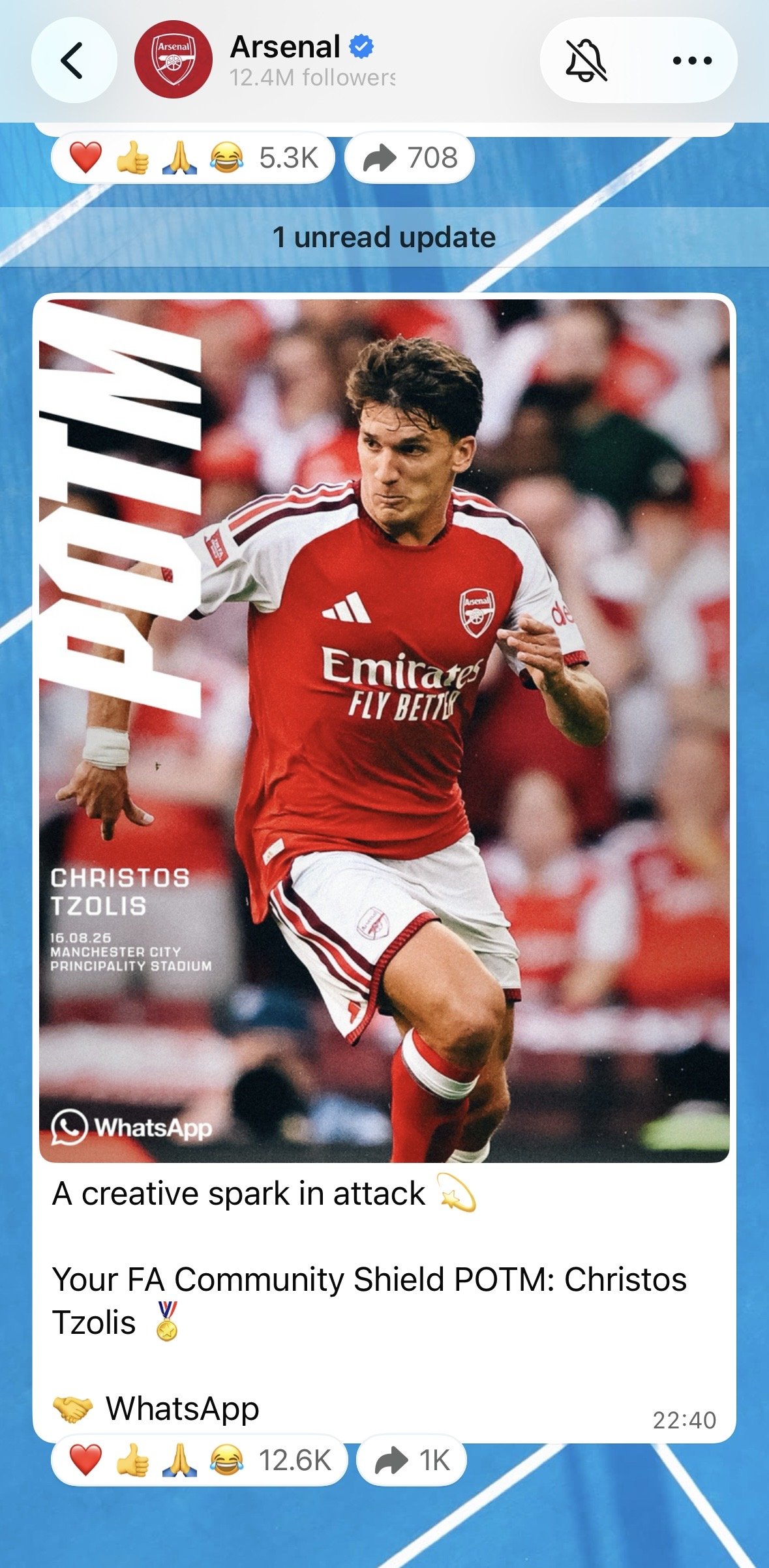
Here are two examples of how sponsors are integrated into marketing and updates efforts. Above is Deel - the sleeve sponsor being shared to 12.4m followers on WhatsApp, 32.4m on Instagram, 50m on facebook & then on X to 21.6m, and below is WhatsApp being promoted (on their own platforms WhatsApp, Instagram & facebook again as well as X) with the player of the match award, which fans answer polls on straight after the game. The algorithmic reach might be suppressed; however, the total reach of fans across the world is in the millions.
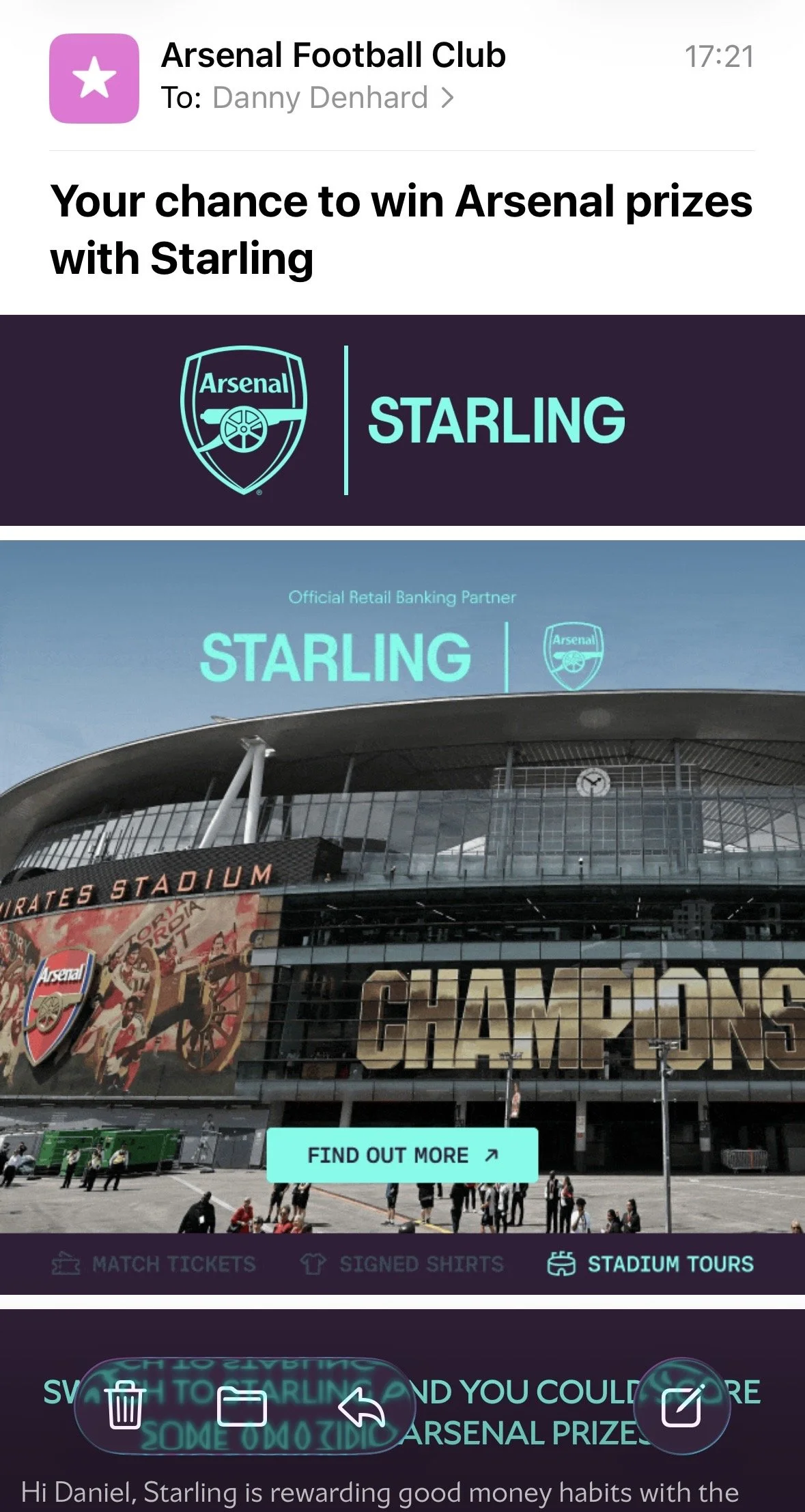
Here is an example of how sponsor Starling bank has its own dedicated email sent to the Arsenal fan base, two days before the first match against Coventry
The Sponsors & Their Strategic Objectives For The Sponsorship Deal
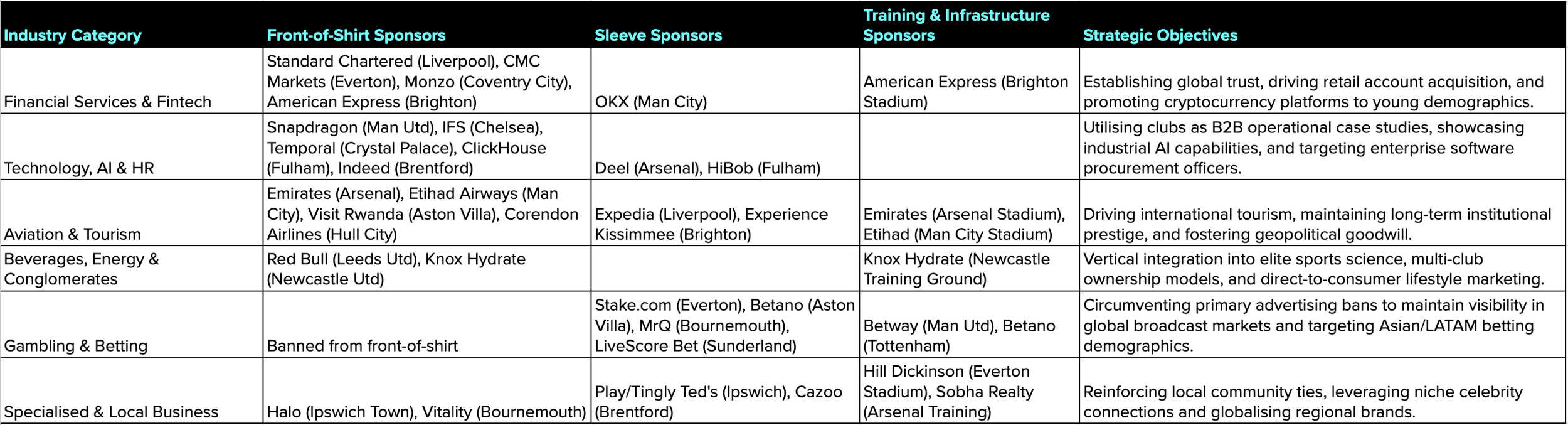
The new corporate deals really now fall into a few categories, gambling and betting is still prevalent on the sleeve sponsorship. Many of the sleeve sponsors also sponsor the advertising hoardings too.
The smartest operators are spreading risk across multiple assets while leaning into the Premier League’s global digital reach. Sleeve sponsorship is a lower financial commitment with many of the benefits that front-of-shirt sponsorship has.
The Adidas Premier League
Adidas is the dominant force in kit providers this season.
They’re supplying 8 of the 20 Premier League clubs, including tier 1 clubs like Arsenal, Liverpool, Manchester United and tier 2 clubs including Aston Villa, Leeds, Newcastle, Notts Forest and Fulham.
It’s the biggest share they’ve held in a decade and underlines just how strong their position is at the top end of the market, while Nike has stepped back again. Adidas’ success in football as continue to grow while Nike commerical success has also coincided with less reach in core football markets.
This season we will see sponsors try to fill front-of-shirt deals after the original deadline; these will be one-year deals (Chelsea have had to rely on this tactic) and shorter deals to see what ROI and reach they gain from what, on the surface, looks like very expensive commercial and marketing activities
Let’s dive a little deeper with Arsenal as an example:
Front‑of‑shirt sponsorships, like Emirates with Arsenal, sound simple on the surface: brand logo on the shirt, big cheque in the bank.
In reality, these are long, complex commercial partnerships that sit at the heart of a club’s business model.
Here’s the simple breakdown.
The Money
These are multi‑year deals usually worth tens of millions per season. For a club at Arsenal’s level, a front‑of‑shirt sponsor is one of the biggest single revenue lines they have, right alongside TV money and matchday income.
Clubs don’t get a giant lump sum.
The cash is structured as scheduled payments, typically annual or spread across the season, transferred straight from sponsor to club. On paper, accountants then smooth that income over the life of the deal, so the revenue matches the years the sponsor sits on the shirt and around the stadium.
There’s usually a guaranteed base fee, and then a layer of incentives.
Continue to make the Champions League, win the Premier League (let’s hope again this season), have long runs in other cup competitions → sell more shirts → deliver more eyeballs = the sponsor pays more.
Underperform, and the club sits closer to the minimum guarantees.
For the club, it’s predictable, planned income that allows them budget wages, transfers and infrastructure over multiple seasons.
For the sponsor, it’s constant, global visibility every time the team plays, posts, or sells a replica shirt.
The Timeline
Standard shirt‑only deals are often 3 to 5 years.
Arsenal recently extended their partnership with Emirates with continued stadium naming (The Emirates Stadium) and pre-match and training kits, you’re talking seven to ten years or more.
There is a trade‑off: clubs swap some future flexibility for security, while sponsors lock in long‑term association and pricing even if the market moves up. This cuts both ways.
If the club explodes in value and on‑pitch success, they might be stuck earning less than the going rate. If the club stalls or declines, the sponsor may be tied to a weaker product than they paid for.
Some clubs have to look for external revenue streams, more sports being played at their grounds (Rugby or NFL games) and concerts being held there.
These partnerships are written to be stable but not unbreakable.
If someone stops holding up their end of the bargain, missing payments, fails to deliver rights, serious reputational damage, licensing issues, then there are clauses to pause, scale back, or ultimately terminate the relationship. Burnley, who recently dropped out of the Premier League dropped their sponsor before the season kicked off and had to refund fans.
That often starts with suspension of rights: logos covered, signage removed, activations paused. Full termination usually needs clear “material breach” or severe brand damage, and often ends with a negotiated settlement or buy‑out.
There are also performance and risk‑based protections. West Ham are a core example of this. They were relegated and lost huge revenues and deals, clubs who repeatly failure to qualify for Europe and who struggle to fill stadiums will lose revenues.
There have been major scandals that can all trigger renegotiations, step‑downs in fee, or break options depending on what’s in the small print.
From the club’s side, these deals are about stability, upside from success and the prestige of a global brand on the front of the shirt.
From the sponsor’s side, they’re about owning a permanent piece of the matchday broadcast, the social feed and the replica culture that surrounds a modern club.
Simple on the football shirt.
A moving corporate machine that has to be sophisticated sits underneath, powering this moving forward.
