Podcast to Profit: How Smart Brands Turn Listeners Into Owned Audiences & Communities
On this week’s Marketing Unfiltered, I invited Ainsley Rossitto, who is Head of Podcasts at beehiiv onto the newsletter for a Q&A on how brands can succeed in podcasts, building communities and what they can learn from creators to ensure the best content outcomes.
The interview below is lightly edited below for the best reading experience, you can listen to the full remote audio recording below or
How Smart Brands Turn Podcast Listeners Into Customers & Communities
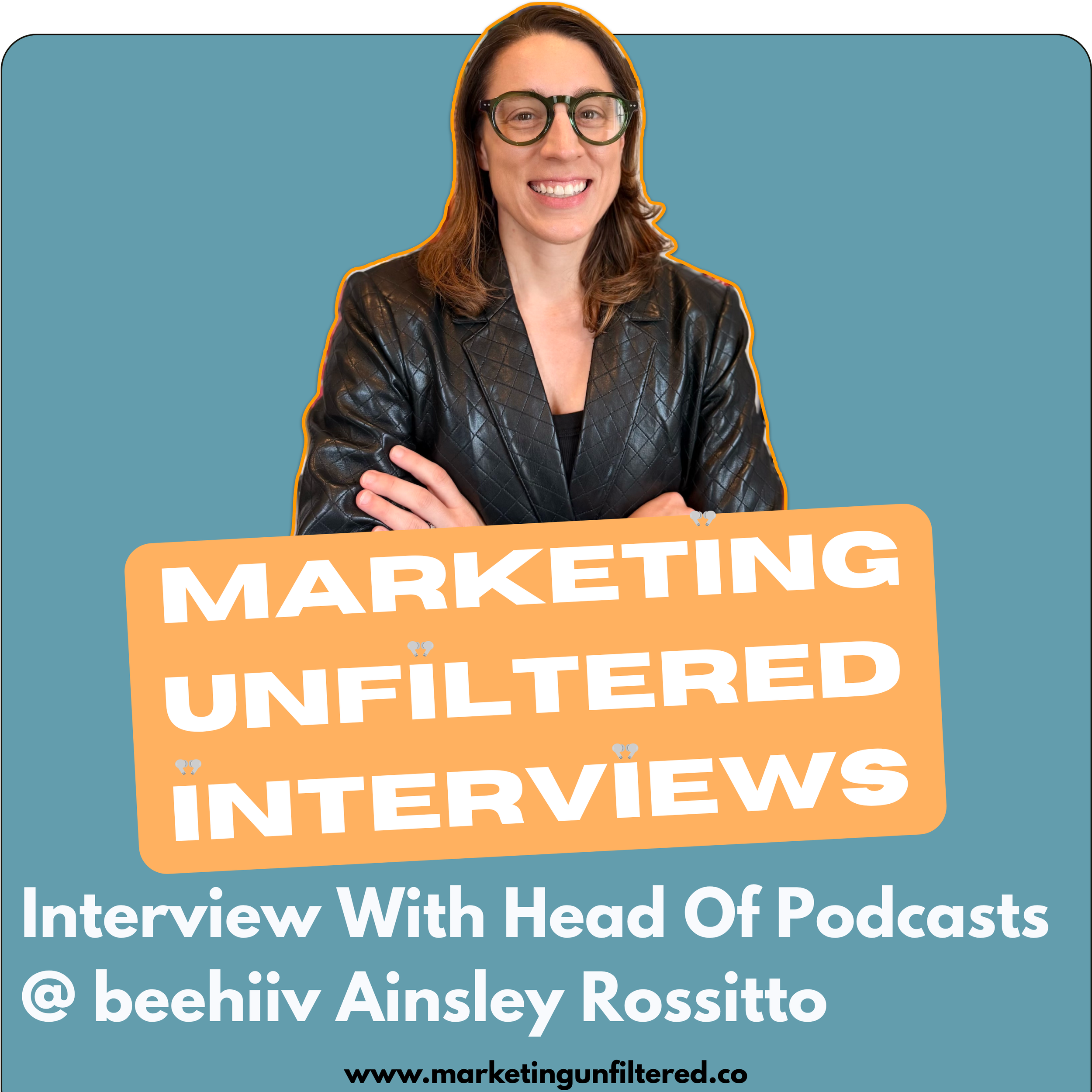
Ainsley Rossitto is Head of Podcasts at beehiiv, where she leads podcast product and go-to-market strategy, helping creators grow, own, and monetize their audiences. Previously, she held senior roles at Paramount Global and NPR, working across podcast strategy, audience development, and operations.
→ Connect With Ainsley On LinkedIn // X // Instagram
Q1. Brands are finally fully embracing podcasts and most are truly thinking about the audience. What are you seeing and what do you think brands could do more of?
I think the strongest brands are getting clearer about why someone would actually choose to spend time with their show. They’re thinking about what access they can offer, what do they know that other people don’t, what conversation can they have that would be useful even if you never bought their product. I think there’s an opportunity that they can expand upon what actually happens between podcast episodes.
You can spend all this time building trust with someone through a podcast and still have no direct way to reach them. They follow you in their favorite podcast app, but you can’t email them or ask them a question or, let them know about something happening outside that podcast feed. And I think that’s why I care so much about connecting podcasts with a newsletter. It gives people a reason to subscribe beyond getting another episode notification. You can share a resource that you mentioned on your show, you can offer an extra perspective, you can ask questions and actually get feedback from your listeners to really build on the parasocial relationship that podcasts can retain so well.
So it gives the opportunity to build a relationship and a platform for it to develop on. And you can also measure that downloads matter and so do people coming back. So having them subscribe to your newsletter, replying to their feedback, and eventually getting them to become customers, a small audience of the right people can be incredibly valuable.
Q2. Which repurposing tactic do you almost never see brands use but you wish they did? Can you share a specific example of a brand that did this well?
Yeah, I’d love to see more brands repackage their podcast content into newsletters and digital products or courses. If a guest walks through how they solve a problem, you could turn that into a downloadable guide, a checklist, a template. If you have a common theme across a number of episodes, you can package those up and create a greatest hits list or start here list. And you can always offer it in exchange for something as simple as an email sign up or even build a more substantial paid product from that series of conversations on the same topic.
One of the other things you could do is take the strongest argument from an episode or a key talking point that resonated and you can build a newsletter around it. You can give your host perspective, practical takeaways, links to additional resources that maybe you didn’t have time to cover in the episode that gives someone a reason to read your newsletter even if they’ve already listened to your podcast episode. I think the other thing that is always underestimated is the value of your back catalog, look back at it. If you have five interviews on the same topic or a challenge, you can build them into a newsletter series or a digital playbook. There’s always more that you can create from work that you’ve done.
One of the Beehiiv creators that’s a good example is Jonathan Lovett and For The Long Run. Each episode he does becomes video assets, a blog post, an email. There’s always a call to action to join his email list throughout his content. His sponsorships also span all of those surfaces.
They’re included in podcast, newsletter, social, events. So it ties it to a practical business reason to also connect those touchpoints. You can build on the attention each one earns.
Q3. Podcasts are much more than Q&A. One of the reasons podcasts travel so well is the nuance and strong opinions shared. What are some of your favorite tactics?
Yeah, so I love when a host actually follows the interesting part of an answer. Sometimes a guest says something surprising and the host just moves to questions. And I think if you stick with a script and you just are going through your questions as a checklist, you’re really going to lose the organic conversation, the surprising points, and all of that. And I think podcast hosts often, they come to interviews already knowing the answers, but they want to tease out the gems and all the thoughtful things that their guest has to share. And so you need to stay on those points and sometimes follow a thread in a conversation that might not be, your next question. And that’s when you usually really get something that people haven’t heard before or that becomes the quotable thing for social or that you pull out in your newsletter.
I’d say recurring segments are great too, because people start to anticipate them, and I really like when you bring the audience into the editorial process. You can read a listener’s response, play their voicemail, or say come back next week and a bunch of you disagreed on X so let’s talk about it. It gives you a reason to connect the show with an email or a community because someone can hear an idea, respond to it, and then their perspective is reflected in a future episode making it more of a two-way conversation than a one-way conversation. And they’re contributing to where the show goes, which makes the relationship a lot more interesting for everyone.
Q4. Podcasts are at the centre of healthy and heated discussions. What are some of the ways you see brands and enterprises embracing this?
I think brands are more interesting when they let people with actual experience talk through something that hasn’t been neatly resolved.
What are customers getting wrong?
What does the industry disagree about?
What decision did your team make that was harder than it looked?
You can have a strong perspective and still acknowledge the trade-offs. That’s often more credible than a perfectly polished answer that makes everything sound easy. I’d also encourage brands to keep listening after the episode goes out. Ask people what they think in the newsletter, bring a specific question into the community.
If the response exposes a gap in your thinking, address it in the next episode. That feedback can make your content better and it can tell you something useful about your business. It could also point you to language your customers are using, things that are confusing them, what they want more help or information around. You just have to be willing to do something with the answers that you get.
Q5. If you were launching a brand podcast next month, what are 3 non-negotiables you would set to cut through feeds from day one?
A specific audience and a clear reason for them to listen. A podcast about business generally gives me very little. Tell me who it’s for, tell me what differentiates it from the podcasts that are already out there in the space, and what the audience is going to consistently get that they can’t get anywhere else.
A host and a format that you can sustain. You need someone with curiosity and a point of view. You need to have a production commitment and a frequency your team can actually keep up with. I’d rather see a really good consistent audio show than a team trying to launch every possible format and burning out and having inconsistent episodes drop.
A plan for how people are going to find your show and how you’re going to stay connected with them. It’s not enough to record something and publish it somewhere. You have to make a plan for how to get that content in front of an audience who is already reaching your audience? What can your email list do for you? What would make a listener want to subscribe to your newsletter or visit your website? I’d define what success looks like to you before launch, if a goal is reaching a specific group of decision makers, a smaller show that earns their attention every week could be exactly what you want to strive for versus getting hundreds of thousands of downloads. So take a minute to decide what success is going to look like, put some time bound, goals together, and really kind of strive to set those.
Copy & Paste Into Teams Or Slack → https://www.marketingunfiltered.co/p/104
Q6. There are a ton of platforms that have matured and moved into enterprise. What makes beehiiv so unique?
So what drove me to beehiiv is that we could approach podcasting as part of a whole business someone is building. Getting an episode published is essential and getting it distributed to all the major platforms, really core. But creators also need to find an audience and keep people coming back and in most cases, make money from the relationship that they’re building.
On beehiiv, your podcast is connected to your newsletter, website, paid subscriptions, community, digital products, all the things.
So practically publishing an episode can create its own ecosystem for you to promote and grow and engage with your audience.
And it all happens in a really kind of automated way.
Those connections really matter because they give people a path from discovering your show to becoming someone you can reach directly and potentially becoming a paid supporter.
I love that, we can provide the infrastructure behind a business as big or as small as you want it to be. If you just want to host your podcast with us, that’s fine. But if you want to host your podcast and website and newsletter and community with us, we make it so easy for all of those things to be interconnected. And we give you back more time as a creator by doing that your audience can listen in apps that they already use while you build your own home and a direct subscriber relationship. I mean, that’s the distinction I care about. We’re helping someone grow a business around their podcast with the publishing, audience, and revenue tools working together and working for you.
Q7. Community is something beehiiv is committed to. What should CMOs and brand leaders know about this deliberate deeper shift to connection?
I think the question for a CMO or a marketing leader is, what would make people want to come back here when we haven’t just published something? Right? Community gives people a way to build relationships with each other as well as the brand. But you do need a reason for it to exist. This could be access to expertise, helping solve a shared problem, or a place for people to talk about the same thing that they all care about opening up a space and waiting for people to fill it isn’t much of a strategy.
What I like about having community connected to a newsletter and or a podcast is that the conversation has somewhere to go. An episode can introduce an idea, a newsletter can add context to it, and members can bring their own experiences to that. I’d pay attention to repeat participation as well and the quality of the feedback and whether people are finding enough value to stay. I think iterating on your strategy when you have a community is key because the member count only tells you so much, you really have to pay attention to engagement.
Q8. We have spoken about building audience first and then converting into customers. Could brands adopt this in the new media landscape?
Absolutely. Provided they’re willing to be useful before someone is ready to buy.
Most people who are relevant to your business aren’t shopping for your product today, but they might want to understand the industry or get help making a decision. And so your resources are going to be critical and that decision making process. And making sure that you have content there for them to find at that point in the sales motion is key. A podcast is so great because it gives you time to build familiarity and trust. A newsletter gives you a way to continue that relationship and, really learn what people respond to.
Over time, when a need comes up for that target audience, you already know someone. Sorry, you’re already someone they know. That important part is making the content valuable on its own. If every episode is a product demo or feels really salesy, people will figure that out really quickly. So you want the content to be authentic and valuable standing alone.
And I’d separate audience growth from business results when you evaluate it.
Are you reaching the relevant people?
Are the people returning and subscribing?
Are some of those relationships turning into inquiries or customers?
You need to understand the path without expecting every episode or every newsletter to close a deal for you.
Q9. What is the ultimate connective tissue of beehiiv? Will the newsletter remain the core, or could audio and video become the primary engines for community and engagement?
I think the connective tissue is the audience. People can discover you through any format, whether that’s newsletter, audio, video. And different formats play different roles in keeping your audience engaged. And so for beehiiv, our goal is to make tools that make it easier for you to serve that person across those experiences and those surfaces.
Email has a really important role because it can be the direct way to reach people who have asked to hear from you.
Audio at the same time gives you time and intimacy with the relationship. Video adds another way to discover and experience content.
Community gives your audience a way to participate. So the way we’re thinking about everything at beehiiv you can use the pieces that serve you the best.
We want the platform to support either any starting point, whether it’s a podcast or a newsletter, and make it easier for you to build around it. One of the things that’s core is we want to make sure you shouldn’t have to completely rebuild your business every time you add a format.
Q10. What are the next 5 most important shifts about to happen in podcasting?
So the 5 things I would say that I’m watching in the podcast industry are:
Audience ownership becomes a business priority. Changing in listening apps and discovery can affect reach and revenue really quickly. So creators are going to care more about having a direct way to reach and own the relationships they have with their audiences.
I think we’re getting more serious about measuring audience value. Downloads definitely still matter, but so do retention metrics, consumption metrics, and attribution and the ability to track what people actually do next. And we need better ways to understand those outcomes and be honest about what the data can tell us.
More shows are going to be building around multiple revenue streams. Yeah, traditional advertising, I just think we’ve seen a big emergence of paid subscriptions. I think there’s broader sponsorship relationships and multiplatform sponsorship relationships. I think we’re also seeing people find value in smaller, highly relevant audiences and that they can support a valuable business. The tools just need to make those options easier to manage.
This is more on the publishing side, but audio and video workflows are just way too complicated. They need to get simpler and more unified. Video creates a lot of opportunities, but it shouldn’t require adding a second production business and a second publishing workflow. Creators should be able to choose formats based on their audience and resources and have their hosting platform, support all of those things for them as well.
I would say the industry is still trying to figure out its relationship with AI and how that can take, operational work off creators plates. But also maintain and sustain the authenticity of the medium at the same time. So I think we’ll figure out what place and how AI can, most positively impact podcasting over the next few years.
Share The Takeaways With Your Team
A huge thanks to Ainsley for joining us this week and sharing such great actionable ways brands can move into audience and community development over just sending more noise to customers.
The best swipes to steal from this week:
Next week I am excited to kick off our new series, it’s “A Day In The Life” of a marketing leader, a look behind the curtain on how they work, how they make decisions and shape what the future looks like.
Thanks for reading this week and look forward to hearing what you thought of today’s interview, hit reply or email me on mu@dannydenhard.com
Danny Denhard
