AI has trained people to expect instant resolution. It gives answers fast instead of thinking smart, squeezing the early stages of problem-solving and convincing people they can avoid professional help a bit longer.
It has not replaced specialists. It has simply pushed them further down the line, stretching the buying cycle and changing what clients need by the time they finally arrive.
Here is how that delay happens, how the buyer journey is breaking, and what it means for expert businesses.
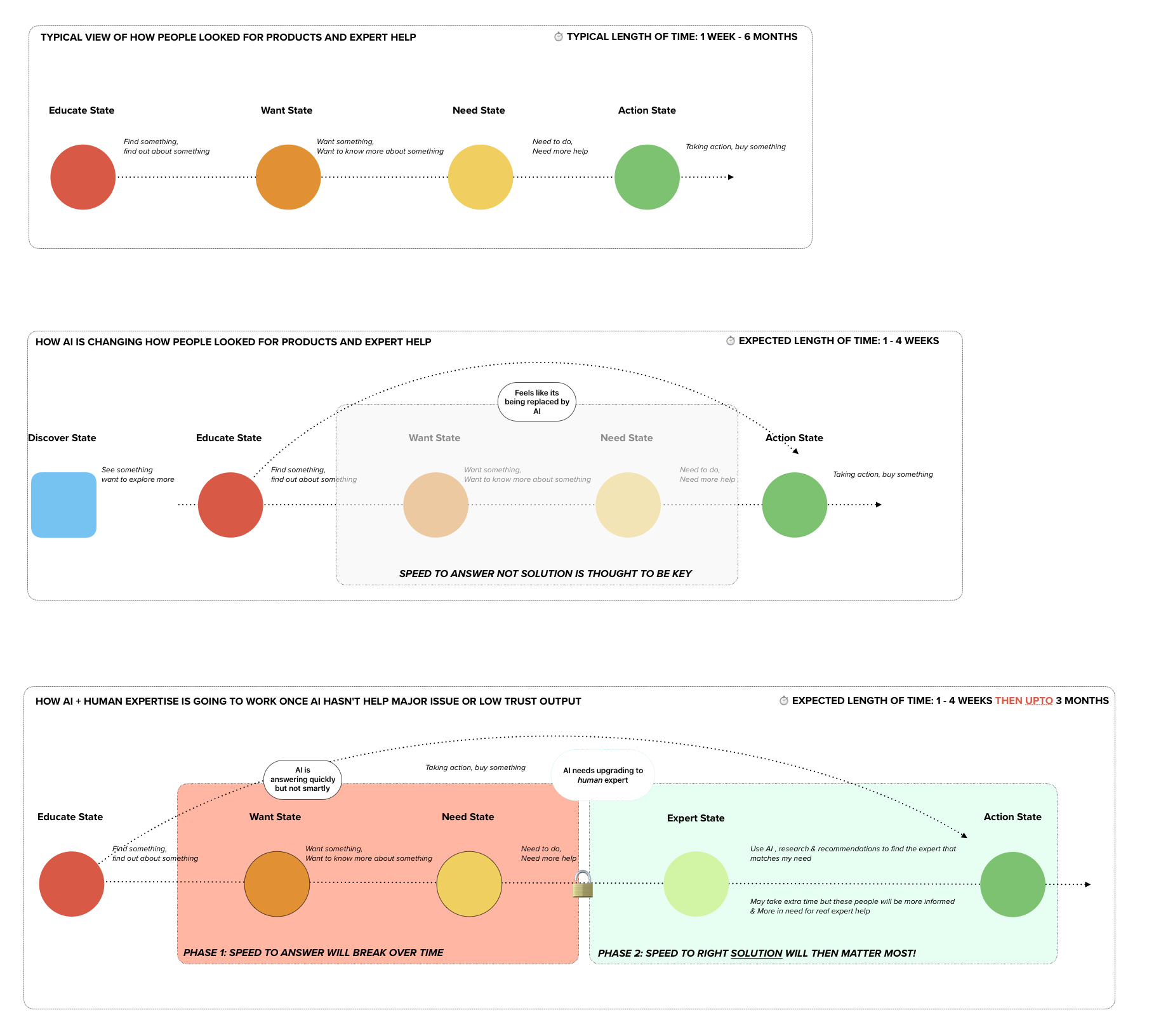
The 4 states of the user journey has been disrupted by AI BUT many people will return to human experts with years of personal experience because of the knock on efforts good enough advice creates.
The Four Stages Of The AI Buyer Shift
1. The traditional baseline: the linear journey
Buying professional advice or specialist services used to follow a clear, steady path:
Educate State: You spot a problem and start looking for foundational information.
Want State: You realise there are solutions and explore different approaches.
Need State: You accept that self-service is not enough and you need hands-on help.
Action State: You choose a specialist, buy a service or book a consultation.
This cycle often took between one week and six months. Buyers moved along the curve in order, usually acknowledging their limits at the Need State before hiring an expert.
2. The current illusion: speed to answer, not speed to solution
Generative tools blow a hole in the middle of this journey by skipping the traditional Want State and Need State:
A buyer discovers a topic, writes a prompt and gets an instant, confident answer.
The middle of the funnel collapses. It feels like the problem is solved because they now have a neat action plan.
The overall cycle appears to shrink to one to four weeks.
The mistake is confusing speed to answer with speed to the right solution. Surface-level advice feels energising, but it rarely covers nuance, emotions or the messy, systemic reality of the organisation it is dropped into.
3. The breakdown point: low trust outputs and stalled progress
Phase one of AI-powered DIY always breaks at some point.
The “good enough” plateau: People follow generic recommendations and see small, short-lived gains.
The behavioural roadblock: Real change demands accountability, pattern spotting and context-specific adjustments. Static text cannot supply any of that.
The trust drop: Once progress stalls or advice conflicts, confidence in AI falls sharply.
Instead of wrapping up in four weeks, the buyer drifts into a stalled state. The timeline stretches by another two to twelve weeks while they gather their own proof that they need something more tailored.
4. The delayed surge: returning to the specialist
When the DIY phase runs out of road, buyers do not reset back at the beginning. They re enter the market with a very different mindset:
More informed: They have already asked dozens of questions and understand the language.
More precise: They know what has not worked and can describe their specific pain points very clearly.
Higher intent: After wasting weeks on generic fixes, they now care about speed to the right solution, not cheap and quick answers.
They skip broad search and move straight to personal recommendations, specialist referral networks and trusted practitioners.
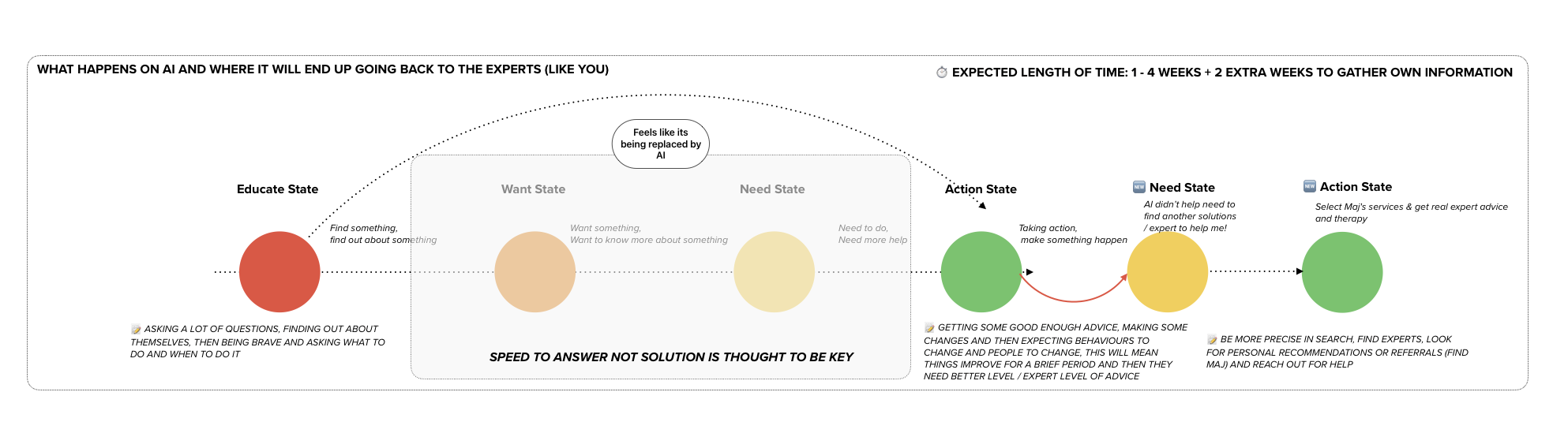
Why experts will see a shift back to them over blindly trusting good enough AI advice
The Trade Offs For Specialists
This shift creates both opportunities and new operational friction.
The Upside
Better qualified leads: When prospects arrive, they already know they cannot fix this alone.
Less basic education: Clients turn up with the basics covered, so you can skip the intro class and move straight into meaningful work.
Stronger pricing power: Real expertise becomes more valuable when set against the failure of cheap, generic alternatives.
The Downside
Longer sales cycles: The journey from first discovery to contract stretches as prospects test free tools and templates before they speak to you.
Unpicking bad advice: Specialists must spend time undoing half finished plans or flawed assumptions that have come from generic models.
Lumpy cash flow: Firms that rely on a steady flow of early stage enquiries feel the effect of delayed decisions and slower movement through the pipeline.
What To Do Next
To work with this delayed curve rather than against it, specialists need to shift how they position and package their work.
Stop selling basic education - If a model can churn out a checklist or a beginner framework, it has no perceived value as paid advisory. Use it as a door opener, not your core offer.
Anchor your message on the breakdown - Shape your content around what happens after the generic advice fails. Speak directly to the Educate State, Want State, Need State and Action State, and to the plateau clients reach when they try to fix everything with surface-level tips.
Optimise for high-trust channels - Invest in peer referrals, case studies and a clear, distinctive point of view. Not all content needs to be given to AI or should be allowed for AI to use against you. When buyers realise the generic route has not solved the core problem, they search for trusted humans, not another list of tricks.
